
21700 vs 18650 Choice Fuels Cordless Advancement
Around here, we primarily focus on the tools and gear surrounding the construction industry. That makes the 21700 vs 18650 lithium-ion battery cell conversations incredibly relevant to us. After all, these lithium-ion power sources reach far beyond the latest cordless tools. They’re driving innovation in Teslas, hoverboards, the vaping community, and so much more.
21700 vs 18650: What do the Numbers Mean?
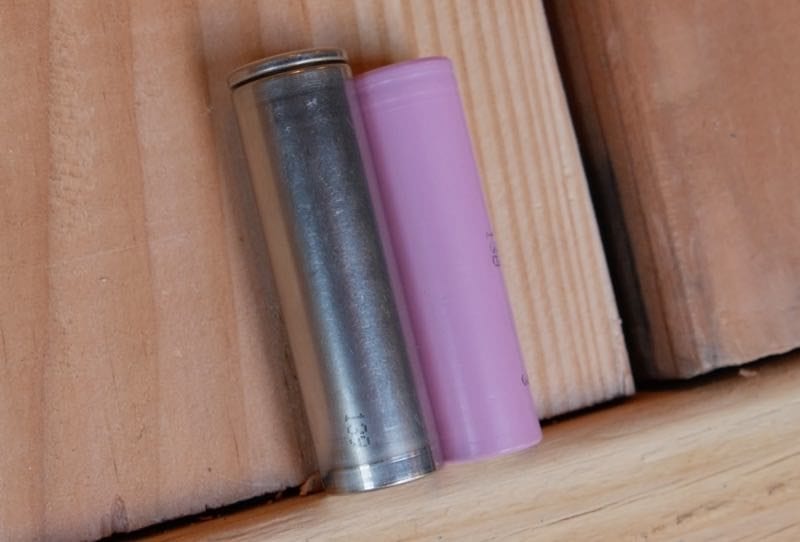
21700, 18650, 20700, and others simply refer to the physical size of the lithium-ion cell. For 18650, it’s an 18 mm diameter x 65 mm length. 21700 is 21 mm x 70 mm. While the explanation is simple, the difference is profound. It’s easy to see with a quick volume calculation.
18650
3.14(9 x 9)(65) = 16,532 cubic mm
21700
3.14(10.5 x 10.5)(70) = 24,233 cubic mm
An extra 5 mm of length and 3 mm of diameter gives us 47% more volume. That’s a little more than 7,700 cubic mm of space to pack with energy-delivering anode, cathode, and electrolyte material.
More Capacity = More Runtime
The most obvious benefit of going with 21700 vs 18650 is that the extra density means there’s more available energy in them to run your tools and gear longer. Batteries that we see using 18650 cells for power tools range from 1.5Ah (1500mAh) to 3.0Ah (3000mAh) in each cell. 18650 cells on the higher end of that scale have reported issues, and 2.5Ah (2500 mAh) cells seem to be where most manufacturers settle at the top.
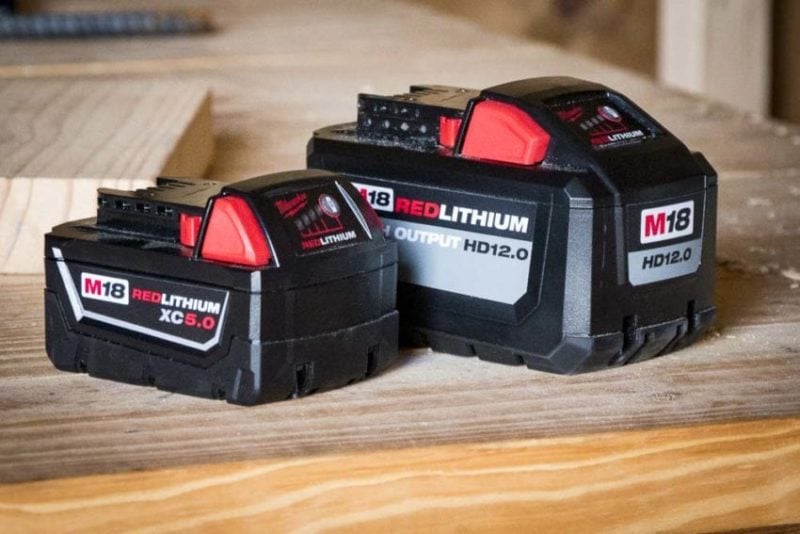
On the other hand, 21700 cells start around 3.0Ah (3000mAh) and go up to 4.0Ah (4000mAh) for power tool batteries. It’s why we see compact (1P) packs that have 3Ah or 4Ah designations all the way up to 12Ah (3P) big boys.
From the perspective of comparing 21700 vs 18650 in power tools, you’re looking at a 50%–100% runtime gain over today’s standard 18650 packs. Outside the power tool industry, some of these cells reach 5.0 Ah (5000mAh).
Current Standard Power Tool Batteries (based on 18V/20V max batteries)
18650 Li-ion Battery Cells
- Compact 1P Battery: 2.0Ah–3.0Ah (36 Wh–54 Wh)
- General Purpose 2P Battery: 4.0Ah–6.0Ah (72 Wh to 108 Wh)
- High Capacity 3P Battery: 9.0Ah (162Wh)
21700 Li-ion Battery Cells
- Compact 1P Battery: 3.0Ah–4.0Ah (54 Wh–72Wh)
- General Purpose 2P Battery: 6.0Ah–8.0Ah (108 Wh–144 Wh)
- High Capacity 3P Battery: 9Ah–12Ah (162 Wh–216 Wh)
21700 Cells Provide More Power
Batteries like the Bosch Core18V, Milwaukee M18 High Output, and Metabo LiHD packs do more than just take advantage of longer runtime. They improve their packs’ cooling abilities and build them with better materials that reduce resistance (ohms). The result is a battery with much greater power available.
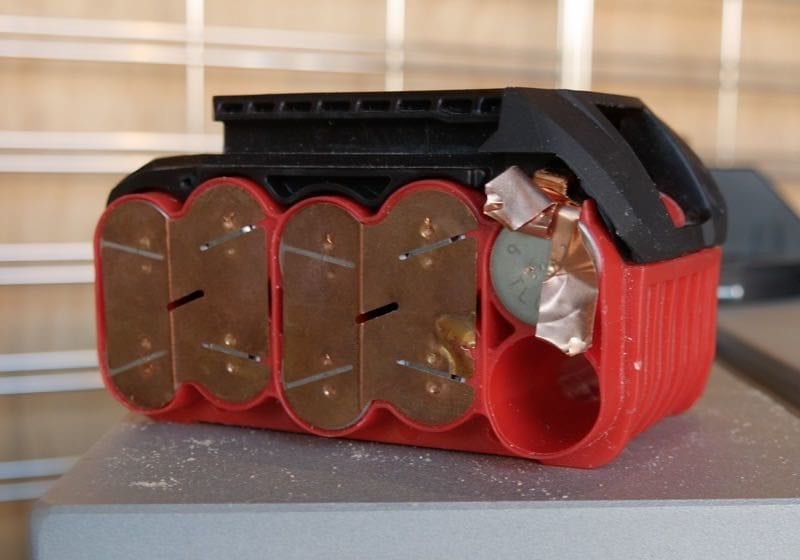
Take Bosch, for example. Their standard 18V batteries can produce up to 800 watts of power output. When they upgraded to Core18V, it went up to 1440 watts—an 80% power increase! Other brands report significant power gains as well.
It gives them the ability to produce cordless tools that we didn’t think we’d ever see without a cord just a few years ago. And many of them are outperforming their corded counterparts now.
Power tools are hardly the end product. Outdoor power equipment for lawn care and landscaping, battery-powered inverters, and battery-powered construction equipment are all starting to have cordless options thanks to 21700 lithium-ion battery cells.