
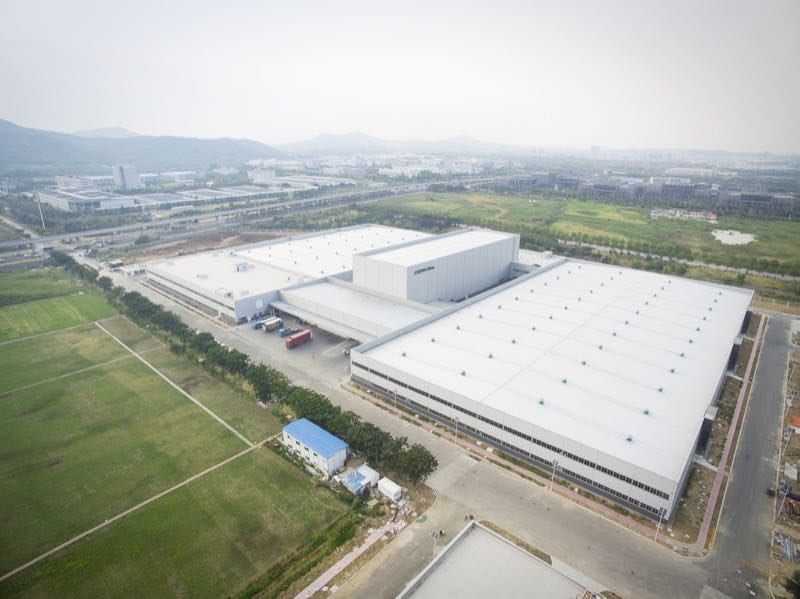
While the Chervon Green Factory opened in July 2015 and has over 3 million square feet of production space, its original factory was where we started our tour. This is a 2.2 million-square-foot facility that was constructed in 2006. The Chervon factory tour was led by Mr. Ke Zuqian (GM of Chervon, pronounced “Mr. Kay”), who currently runs the factories. After our Chervon Research and Development tour, this was the next logical stop.
As a company, Chervon is focused on vertical integration, spanning from research and development to manufacturing, final assembly, and quality control. In fact, Chervon is investing a lot in all of these areas. The key parts of manufacturing include the tooling workshop, which makes anything to do with the tool housings, internal electronics, and motors.
Chervon Factory Tour: Tooling and Machining
Tooling involves more than just making metal molds. It’s a detailed process for ensuring the materials used correctly fill the molds and ensure proper material fit in the final product.
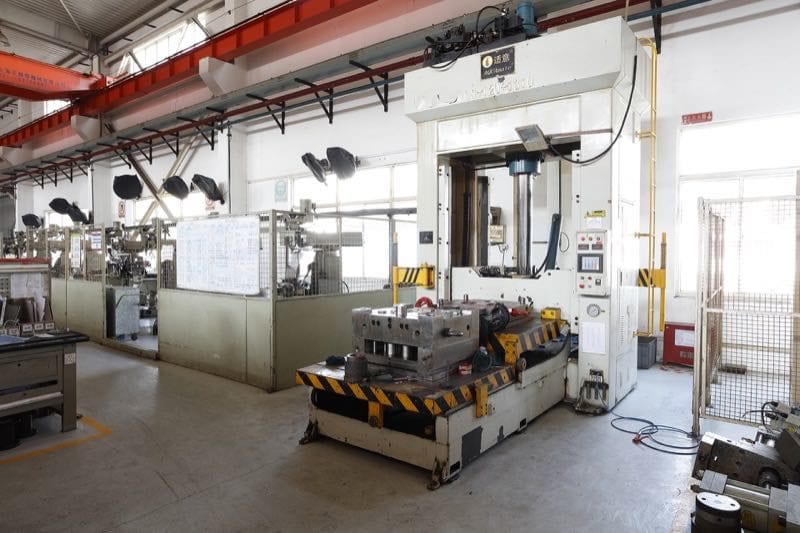
In the grinding room, we saw CNC machines water cutting the tools—and other items used to create the tools which make the tools. CAD rooms housed engineers who designed the actual digital models used for setting up the tooling for products built in the factory. There’s a lot more involved than we ever would have thought. Computers are used to simulate how the mold process will work with the materials. Different colors represented different risk factors for deformation, and the design can be optimized for both results and efficiency. A CAM (computer-aided machining) is then used to determine the optimized machining methodology for making the part.
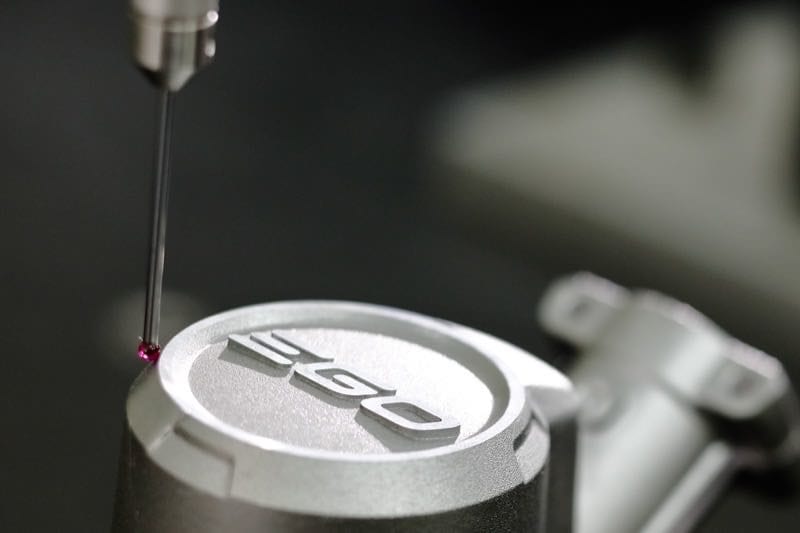
Only after all of this is designed can production of the tooling and parts begin. This process is used for both plastic injection and Alu-die casting molding. This area is really the starting point for ensuring the quality of the tools is optimized. But even just ensuring your computer simulations and tests are right isn’t the final step. For making tooling, actual measured precision is imperative. One way to do this is to use a high-quality measurement device, such as a Zeiss Contura, to match the produced tool to the computer design. There are always differences between the computer design and the final tool, so understanding these deviations is imperative to staying within desired tolerances.
The final step is called the “sparking” process. Heat treatment for the cavity and insert is important in order to ensure the tooling holds up to constant and long-term use. A manufacturing tool is only good until it no longer produces reliable components. Sometimes, when manufacturing a tool, Chervon leaves a bit of extra material to compensate for potential deformation, and then they can use the sparking process to achieve the final desired specifications.
One of the tools we got to examine on this leg of the Chervon factory tour was the insert and cavity tools for the EGO 56V 5.0Ah battery pack—this is the battery that comes with the new EGO LB5300 56V blower.
Plastic Injection Workshop
Chervon uses more than 60 injection machines. They have a centralized drying and conveying system that keeps everything moving and aids in the production process. Changing out a machine from one mold to the following type of mold can be done almost instantly, just by moving the linking from one machine to another. It’s a well-thought-out system that offers considerable flexibility and productivity enhancements.
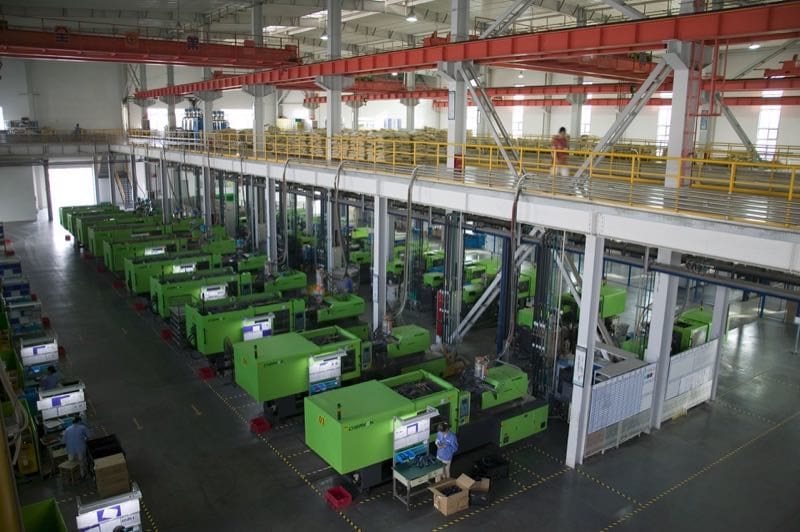
For larger parts, Chervon uses robots to pick and place parts out of the machines, which makes more sense since human workers would require too much exertion and couldn’t perform the duties as quickly (or as accurately). For smaller parts, standard methods using people are much more effective and practical.
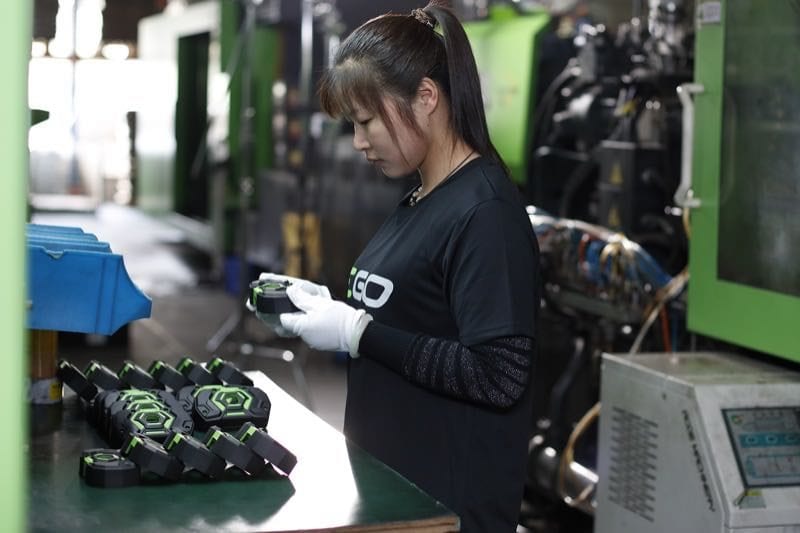
In Chervon’s quality management system, color management is particularly difficult. The human eye is notoriously easy to fool with color graduation. To combat this, Chervon uses a set of controlled standard “chips” (color swatches) that are good for 10 months and represent the upper and lower limits of the color for the particular part. These color chips also feature multiple textures, so you can observe the part accurately regardless of the texture of the plastic or polypropylene part on which the color appears. As you can imagine, trying to manufacture a tool for an OEM manufacturer and gradually turning their blue tools turquoise would not be well-received!
Machining Center
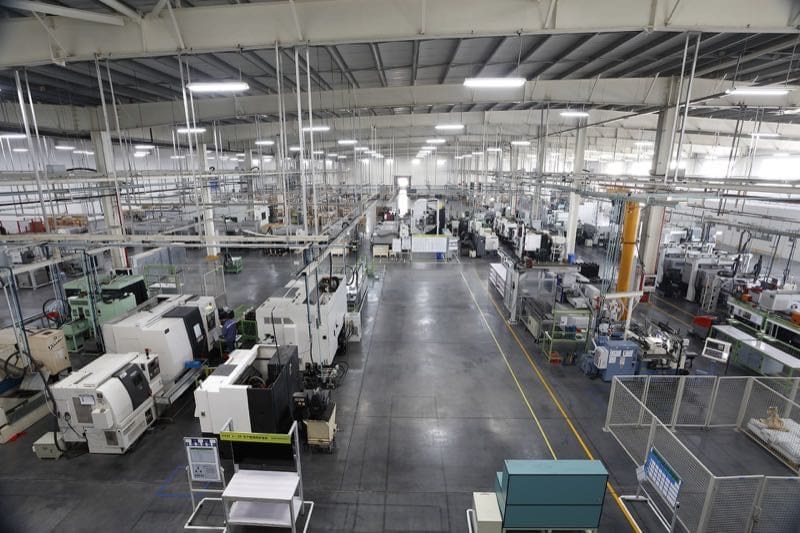
In the Chervon machining center, the company uses a quality assurance management system that specifies exactly which dimensions of a part are most critical to quality. This is very similar to what they do with the tooling, but as it pertains to the interactions of the final parts and components. They can also gauge repeatability and reproducibility, understanding how their measurement system on the front end affects the tools produced on the back end. Finally, random sampling allows for additional data evaluation, which helps Chervon maintain the overall process capability of its parts and components. Chervon has its room set at a constant temperature to ensure that its measurements for each part are truly accurate.
Die Casting Facility and Foundry
This was one of my favorite places on the Chervon factory tour. The ceiling in this foundry showed just how clean this facility was. It’s been open for 10 years, and there’s no visible discoloration above. Considering how much metal is formed and manipulated in the room, that’s a great testimony to Chervon’s efforts to keep their facility and air quality clean and safe.
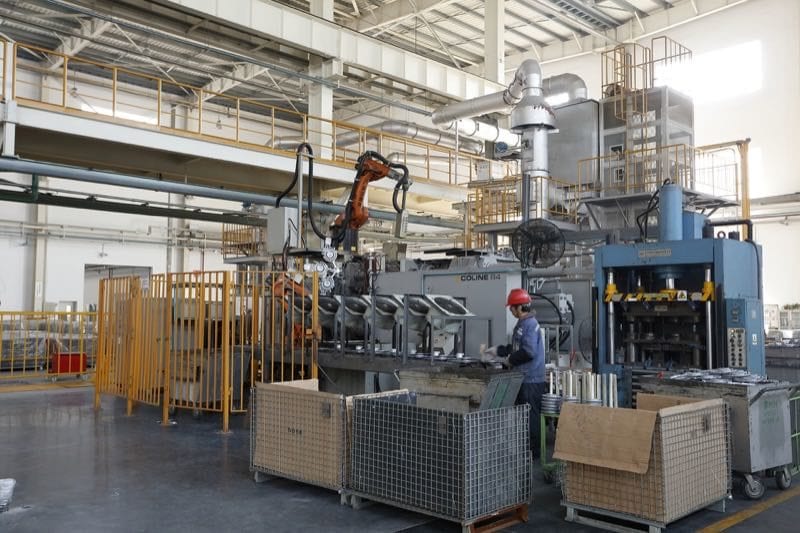
The die casting machines we saw were fully automatic, and only one worker works in a cell to manage the process. In other facilities you’d see 6–8 workers per cell. Computerized, data-driven improvement systems are the next big thing for “smart” factories, and Chervon is still in the planning stage for a true “smart” factory. Indeed, some of the preliminary features of that type of facility are, in part, already being seen here.
To illustrate the workflow we observed during this part of our Chervon factory tour, one robot transported liquid aluminum (at over 1200 degrees F) to a machine that picked up smaller, specific quantities of the hot metal and poured it into an on-site furnace for die casting. The machine then spit out the finished part, and the employee in the cell removed it, put it into a demurring fixture, checked for flaws, and stacked the finished piece in a cart. It was interesting to watch robots and humans working, essentially, side by side to complete tasks that couldn’t be done as effectively without the machine’s involvement.
Motor Manufacturing
One of our final stops in the Chervon factory tour was the motor manufacturing workshop. Chervon produces both AC and DC motors, including brushed and brushless models. Companies have to decide whether to “make” or “buy” these components. For high-quality products, the decision is usually to build the motor in-house.
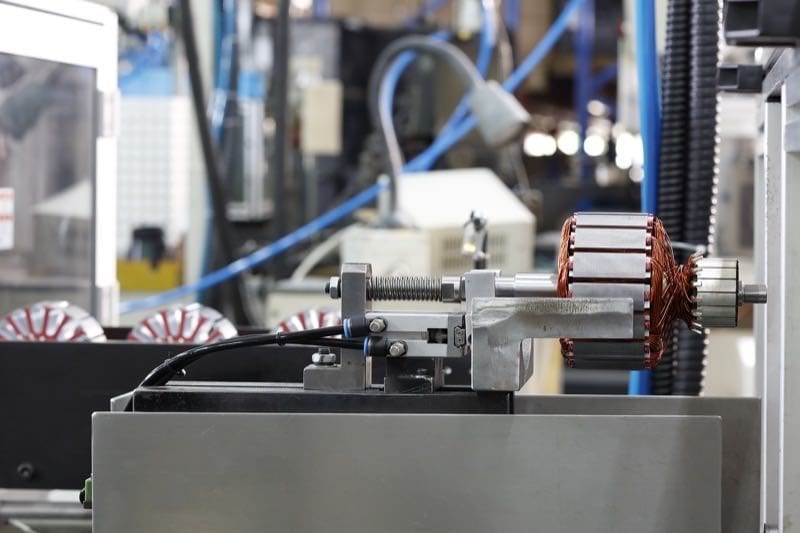
This is also affected by the volume of parts needed for the product run.
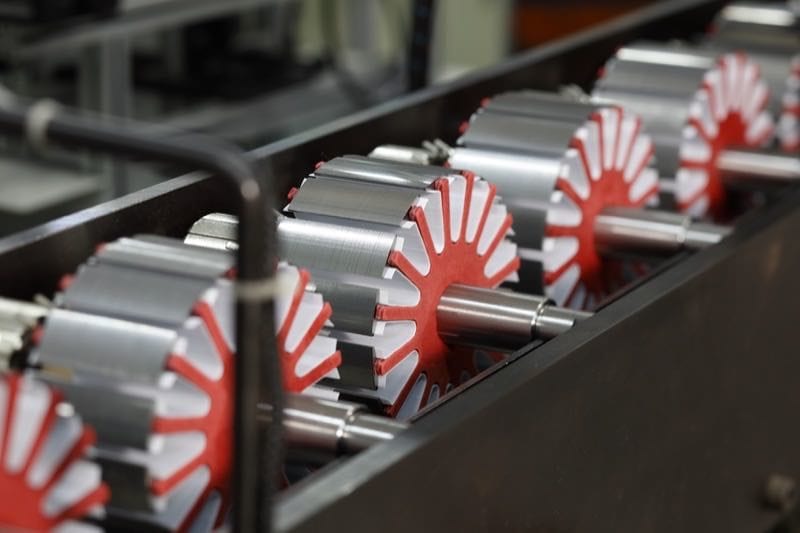
On a typical brushed motor line, a single employee can now manage the entire line. Years ago this used to take a dozen to as many as twenty employees. Process control is handled by manually inspecting the commutators via microscopes. Chervon makes both outer runner and inner runner brushless motors, keeping their options open and enabling them to optimize the right solution for the proper application (For example, the inner runner motor allows for higher RPMs, and the outer runner is smaller and lighter in weight). This facility uses more of a lean concept of manufacturing process, the goal being the find the fastest production process as opposed to the cleanest process.
Conclusion
Being able to walk around and participate in the Chervon factory tour allowed us to get a great feel for how a larger factory produces a high volume of power tools reliably and repeatably. There’s a lot that goes into cordless and corded power tool production and understanding the backside of things did a lot to help the folks here at Pro Tool Reviews develop a more thorough understanding of how to test and evaluate tools once they get into our possession.