
While using drones in the construction industry may be a relatively new concept, the use of two-way radios for construction job sites isn’t. The two-way radio is about as “staple” of a device as you can get in this industry—at least when it comes to the past 20 years or so. Ever since the creation of reduced size electronics that let you carry around long-range radios that could span an entire job site, the two-way radio has allowed foremen, site inspectors, and workers to communicate as needed without having to jump into a truck or utility vehicle and traverse a large—and often dangerous—construction site. As technology has advanced, however, so have the choices you have when considering two way radios for construction use.
We’ve certainly covered cordless job site radios for entertainment, but these workhorse two-ways may change the way you communicate. Relying on smart phones for communication may be an inexpensive solution, but if you’re doing serious demolition or using heavy equipment, you’ll soon find that the low power output of these devices—whose tiny batteries can barely last a day due to the complexity and demands of the processors and LCD screen—leaves very little to drive the onboard speaker.
Among the things to consider are size (Why carry around a larger two-way radio when you can toss something small in your pocket?), range, battery technology, number of channels, and even frequency range. More and more, as the pricing on these new radios continues to drop, the available features expand.
Case Study: Havoc HC-516U Two-way Radios
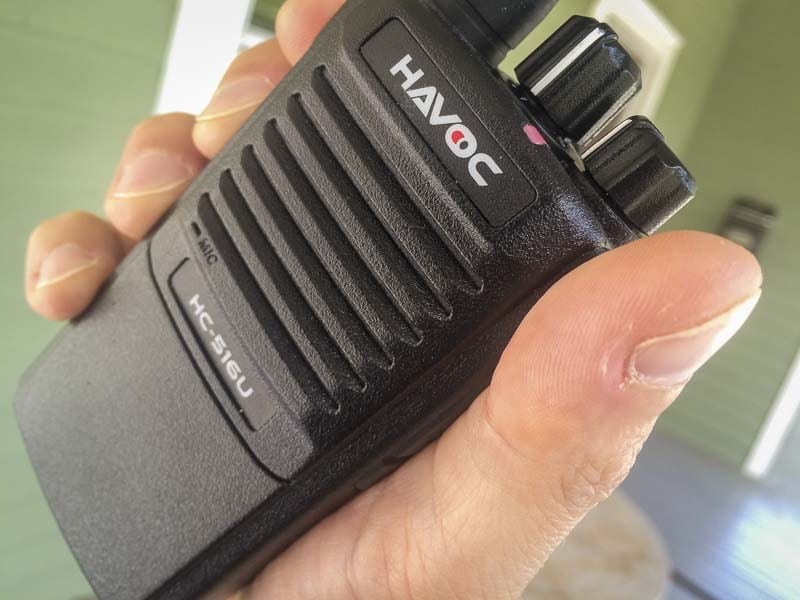
 We got to test out a new pair of Havoc HC-516U two-way radios, and the results were pretty impressive. Beginning with the features, these radios are compact in size (just over 4″ tall), include a convenient desktop charger, have long-lasting 1600 mAh lithium-ion batteries, and can use 16 channels which adhere to the FCC narrow band at 12.5 kHz. There are also two programmable buttons, and it has VOX so you can control the system with your voice.
If you have a large construction crew that needs radios, there are also RFID tags embedded in the radio, so you can easily scan them in and out without worrying about reading barcodes or using stickers.
In terms of controls, the Havoc HC-516U radios have two knobs on top, one for Power/Volume and another for Channel. When you power up the radios, a voice prompt tells you “Power on” followed by the currently selected channel number. Pressing the textured talk button initiates contact with others on that channel, and below that are two programmable buttons that can be assigned to various functions like monitoring a channel continuously, activating VOX mode, or toggling the power level from low to high.
Havoc HC-516U Radio Talk Range
- Open Areas: < 5 miles
- Residential Areas: < 1.5 miles
- Steel/Concrete Reinforced Buildings: < 300,000 sq. ft.
- High-rise Buildings: < 30 floors
Havoc HC-516U Two-way Radio Specs
- Frequency Range: 400 – 470 MHz
- Battery Type: 1600 mAh Li-ion
- Channels: 16
- Channel Spacing: 12.5 KHz / 25 KHz
- Dimensions (HxWxD): 4.0 x 2.3 x 1.5 in.
- Antenna Impedance: 50 ohms
- Operating Temperature: -20 ̊ C to +50 ̊ C
- Weight (w/battery): 8.1 oz (230g)
Using Two way Radios for Construction Job Sites
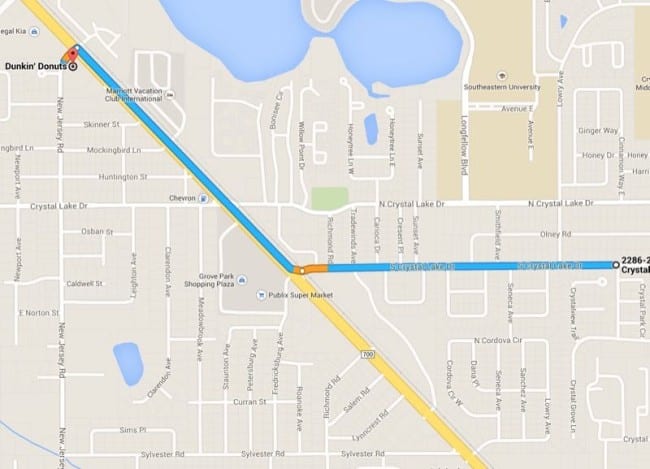
 We took our Havoc HC-516U two-way radios onto a local job site, but honestly most in-town residential and commercial projects around here aren’t much of a challenge for a radio boasting a 1.5 mile in-town range. That’s when we went for a donut run. That’s right, if you’re going to test and use two way radios for construction, why not go for a drive? The local Dunkin Donuts was just over a mile and a quarter away from our residential job site, and we talked the whole way there and back. Only at the end did we experience significant noise and interference, likely from the ample amount of trees and overhead interference. Considering the radios were handling a trip from a 5-lane highway all the way through to street in the midst of a dense residential neighborhood (where some drainage work was being completed), we were impressed.
These radios are also loud, with plenty of output (750 mW) whether you’re using the built-in speaker or connecting an optional headset with mic. I rarely had to turn mine up past the half way point, but there was more volume in the event someone fired up a breaker hammer right next to my position. I can’t tell you how useless a job site two-way radio will be if you can’t be heard on the other end.
Since these radios use lithium-ion battery packs, you want to dock them at the end of the day on their desktop charging stands. Unlike Ni-Cd and even NiMH radios, you should get hundreds, if not a thousand or more “full” charges out of the batteries. That should equate to years of faithful use with no worries as to whether your radio will last all day (with normal use it will).
The last thing to mention about two-way radios for construction is that you want radios that are durable and jobsite proof. I prefer models with an IP56 or higher rating, meaning they are protected against dust as well as forced water jets (which simulates a hard rain or splashes).
Conclusion
If you need to make the jump to two-way radios for construction there are a lot of options. Most of those options, however, involve fancy LCD screens and programmable buttons. The real specs you need to worry about are battery technology & size, output power, range, and size. Of course, with less features, you’ll pay less. The Havoc HC-516U, for example, will run you around $250 each from RuggedSafety.com, or you can pick up a 6-pack of radios for around $1440.