
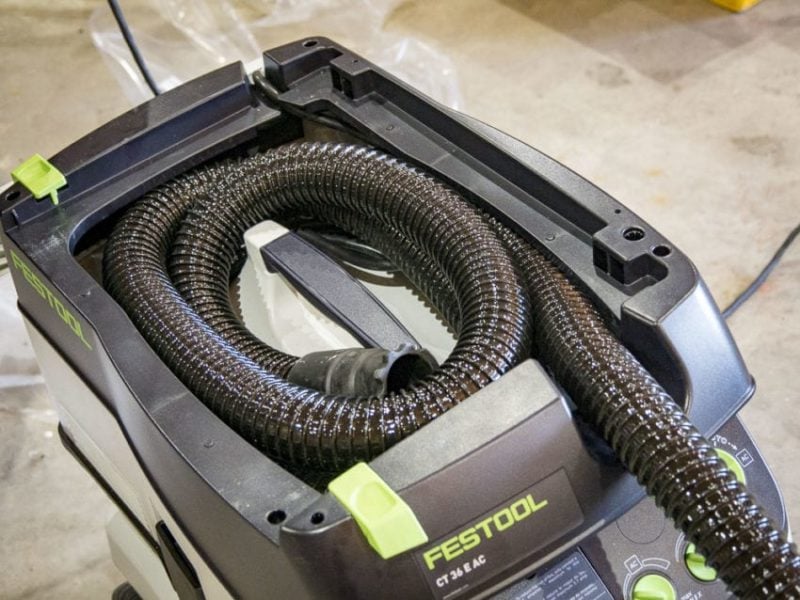
You’re looking at dust extractors and find a couple that catch your eye. CFM and water lift are about the same, but one has a hose that’s 5′ longer than the other. Easy choice, right? The longer one will be more convenient. Well, that depends on how a hose affects your dust extractor and there’s more to consider than just length.
Related Content
How Hose Length Affects Your Dust Extractor Performance
Considering the original question about the hose, length matters. The longer a hose on a dust extractor, the more air friction it encounters. Portable dust extractor hoses aren’t perfectly smooth like the tubes you’ll find running through a shop. Those ridges create friction as air passes over them and reduces performance the longer the hose. However, the performance loss between a 10′ hose and a 15′ hose isn’t so great that you’ll go from much performance to horrible. But you may notice a difference between them.
Diameter and CFM vs Water Lift
Most portable dust extractors use a hose roughly 1-1/2″ in diameter. But you’ll notice the Festool CY SYS includes one that’s closer to 1″ on most of their models. Aside from being somewhat easier to coil and manage, the smaller diameter hose has an effect on performance as well.
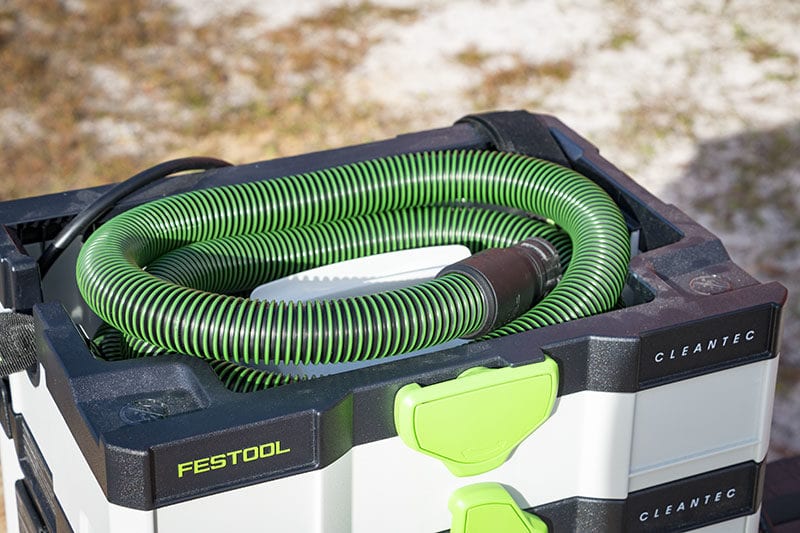
As you shrink the diameter of your opening, two things occur simultaneously. Your CFM (air volume) drops and your water lift (suction power) increases. Suction power is what gets debris moving while CFM keeps it going. So if you want to pick up slightly larger debris and can give up a little on the effective suction area side, going to a smaller diameter hose makes sense. On the other hand, if you’re collecting airborne particles like concrete dust, a larger hose that pulls in more air from a larger area makes more sense. If you want to increase both, you’ll need a bigger motor.
Rigidity and the Jobsite
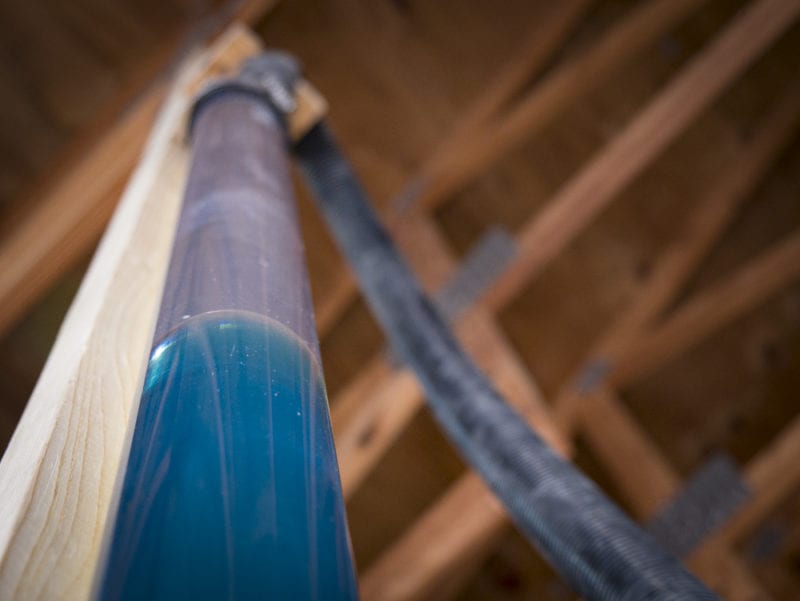
Whether you’re in the shop or on the jobsite, how a hose affects your dust extractor comes down to more than just length and diameter. The rigidity of the hose also plays a part. Mainly, we’re talking about the fact that you’re dragging around a hose and sometimes working it into tighter corners than you should. Just like a water hose, if you begin to kink the hose around a corner, you’ll begin to restrict the airflow and reduce performance. A hose that’s more rigid will resist kinking better.
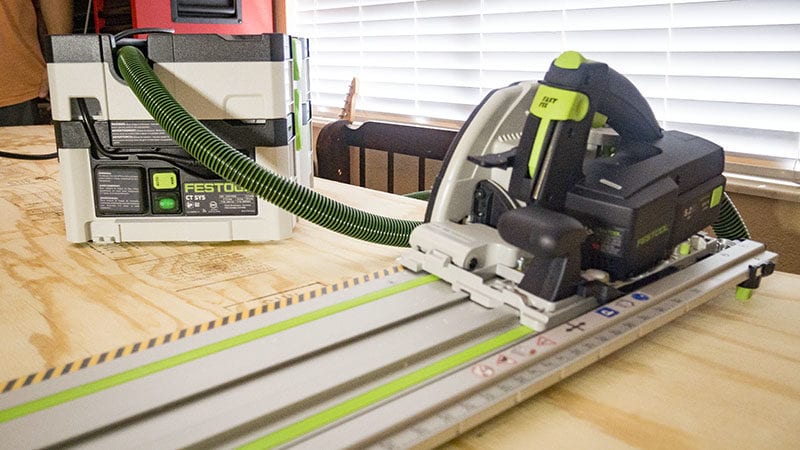
All things considered, we have yet to work with a hose that resists being stepped on or driven over.
Vacuum Hose Connection Type and Quality
You can have the perfect combination of hose length, diameter, and rigidity while still seeing poor performance. Any vacuum system, including portable dust extractors, will only reach their maximum potential when they are perfectly sealed from the nozzle to the motor.
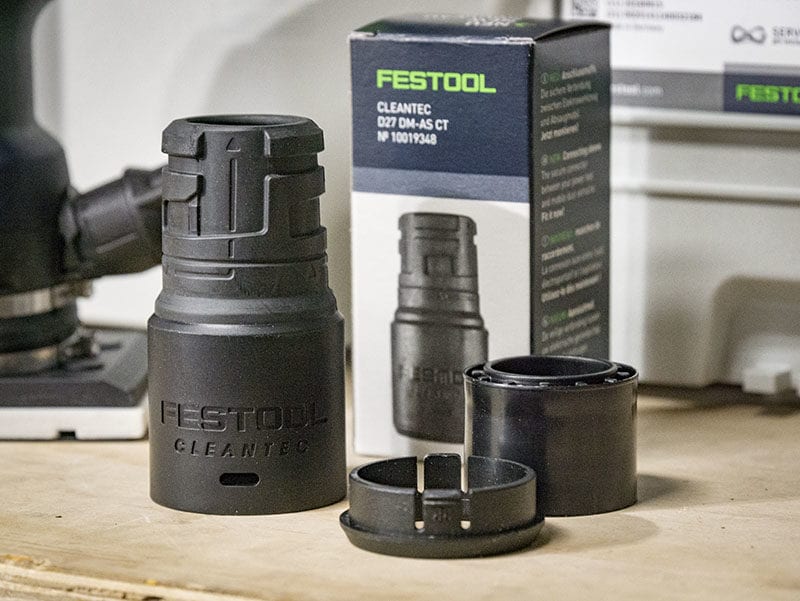
With nearly every dust extractor we use, there are imperfections at the hose connection points to the nozzle and canister that pull air in and reduce performance. The better a manufacture seals these points, the more you’ll get out of your dust extractor.