
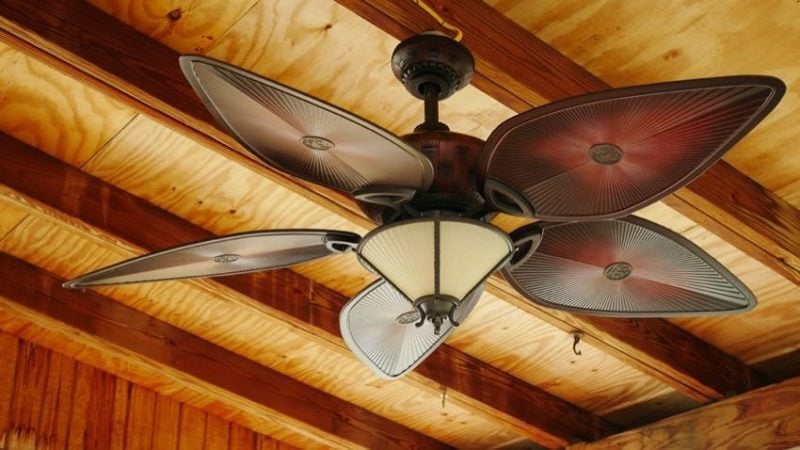
Once you decide you need a ceiling fan, the next step involves selecting a fan that fits your room and your needs. If you haven’t researched ceiling fans in a while, you might go into shock at the enormous selections available. Do it correctly, and it could still be a fun opportunity to influence the look of your room with a fan that reflects your style and taste. Knowing how to choose a ceiling fan means sizing the fan properly to your space.
Of course, it also requires understanding which ceiling fan moves the most air and how the various styles move air differently. After you choose, moving onto installing a ceiling fan and finally wiring and connecting a ceiling fan follow quickly as the next steps.
Before you select a ceiling fan, you’ll want to ask yourself several questions, which we’ve arranged below.
Table of contents
How to Choose a Ceiling Fan Based on Room Size
This seems like an obvious thing to some, but the reason ceiling fans are available in sizes ranging from 30 to 56-inches or more is because each size is capable of moving differing amounts of air. Determining which ceiling fan moves the most air may or may not be your goal, but you still want to match the fan size to the room size.
What you want to do is take some measurements of your room and see which fan would be the best fit. Start with size first, then move to select your preferred style. Below we placed some very basic recommendations when considering which size fan to place in a particular room. For a more thorough breakdown, see our table lower down the page.
- Small bedrooms or kitchens (8′ x 10′) – 30″ ceiling fan
- Medium bedrooms, kitchens, smaller living rooms (12′ x 12′) – 42″-44″ ceiling fan
- Larger rooms (18′ x 20′) – 52″+ ceiling fan
Ceiling fans have a few typical sizes, but they are, in reality, available in a huge range of diameters. This means that you can really get a small or even a really large fan to fill just about any room. You can also add more than one fan to fill a truly large area.
A general rule is to keep the blades of the ceiling fan at least 24 inches away from any wall or obstruction. Your next priority is to match the fan to the airflow needs of the room. Remember, a fan doesn’t technically cool the room, it simply circulates air in a way that distributes cool or hot air as needed.

Check Your Ceiling Height
The ceiling height will help determine how you mount the fan. For example, for ceilings that are 8 feet tall (the minimum recommended height for any ceiling fan) you will need to mount the fan flush to the ceiling. If you have 9 or 10-foot ceilings you can use a standard short or regular downrod. If you have even taller ceilings you can use an extended downrod (over 12 inches).
With some fans, downrods are included, with others this will be a separate purchase. For tall or vaulted ceilings all bets are off. It’s up to your preference as to how low you’d like to hang the fan.
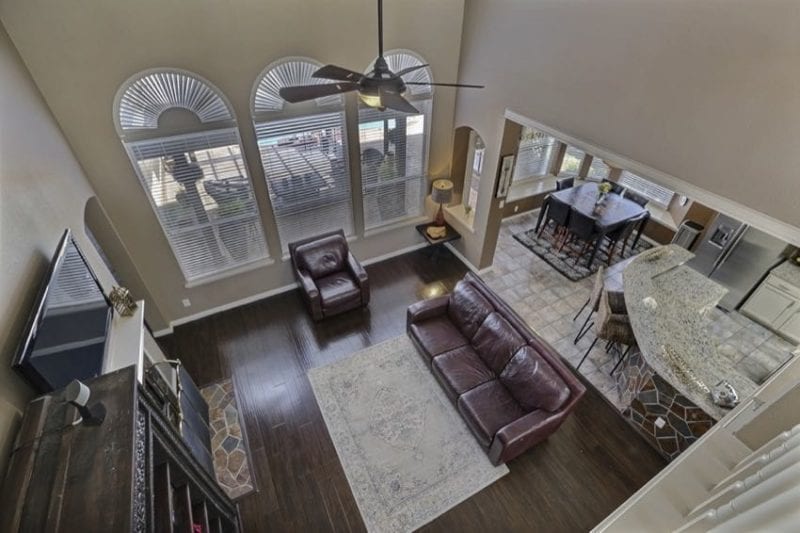
What Style is My Room?
Matching the style of your room is a fun part of purchasing a ceiling fan. Kid’s rooms are truly fun, with lots of creative and colorful designs available on the market today. We’ve seen ceiling fans whose light kits look like little submarines. One of our favorites is a catchers’ mitt with a baseball as the globe light.
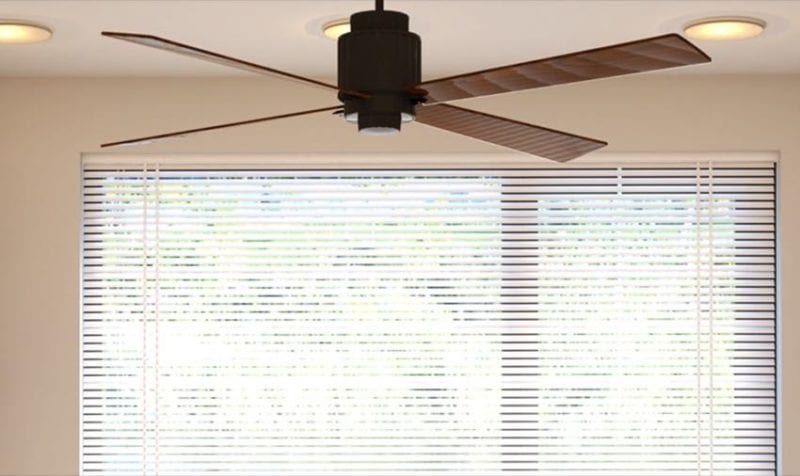
Ceiling fans can be modern, traditional, classic, or playful. One of my favorite styles is a tropical wide fan blade that looks great in beach homes. Many will be familiar with the traditional white 5-blade system that can be found in almost any manufactured or site-built home. You’ll be surprised at how many choices there are out there – don’t worry. Many manufacturers will have sorting systems on their websites for the different styles. This will make picking a fan a lot easier.
Choosing a Ceiling Fan Blade Style
You may have noticed that various ceiling fans look very different in terms of the blade styles. Some offer wide, almost tropical-looking blades while others use traditional blades. Industrial fans often use steeply-pitched thinner blades to move air at higher volumes but at lower speeds.
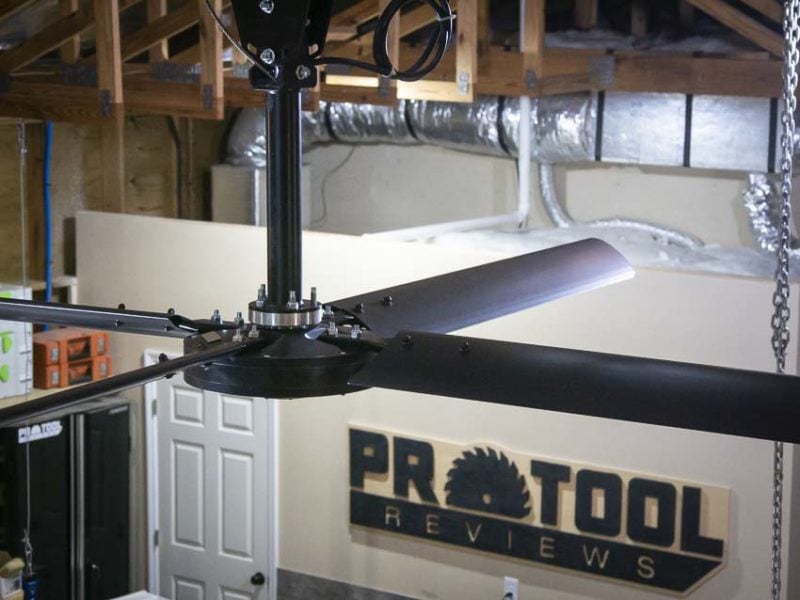
The blade design has a lot to do with both how loud the fan tends to get as well as how much air you can expect it to move. Steeper blades drive more air downward (or upward). They require plenty of power in the motor to handle the increased pressure. They also tend to run more slowly (high volume, low speed).
Traditional ceiling fans feature 5 blades set at a relatively gentle pitch. They rely on increased speed to drive more air down into a room. Compare that to fans using fewer blades with either steeper pitches or wider paddle areas.
Choosing the Right Ceiling Fan Size
OK, let’s say you decided upon a design and now it’s time to pick the right size. For traditional fans, you can use the following guide to make your choice:
| Fan Diameter Size | Room Size | Application(s) |
|---|---|---|
| < 30 in. | Small (50 sq. ft.) | hallways, laundry rooms |
| 30–41 in. | Small (80-100 sq. ft.) | eating areas, bathrooms |
| 42–48 in. | Medium (150 sq. ft.) | bedrooms, offices, kitchens |
| 52–54 in. | Medium/Large (200-300 sq. ft.) | large bedrooms, patios |
| 56+ in. | Large (400-650 sq. ft.) | living areas, large outdoor spaces |
| 65+ in. | Large (800+ sq. ft.) | shops, pavillions |
Final Thoughts
Taking all of these things into account will ensure you have much success in choosing a ceiling fan to complement any room. Pick the fan that fits well with the décor of the room. And don’t forget the most important part: Have fun!