
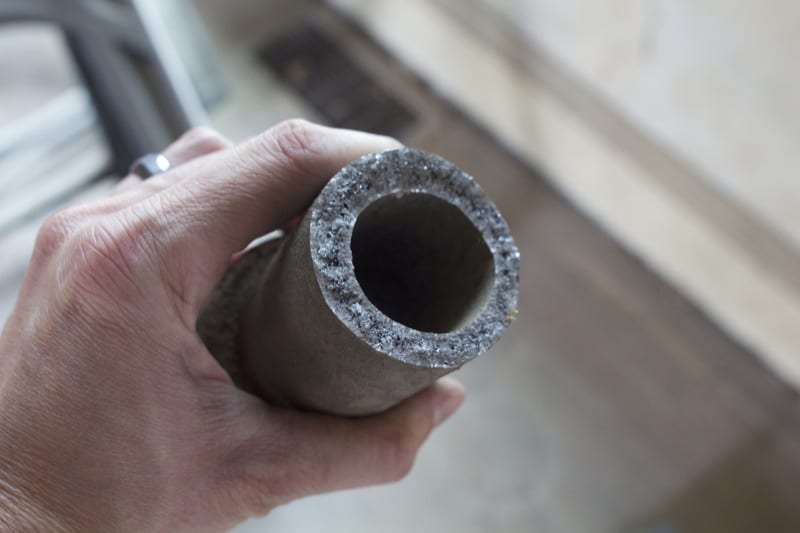
Cutting in-place soil pipes might be an unpleasant job but it doesn’t have to be difficult. All of these methods work, other things being equal, but soil pipe access might eliminate some of them. The age and condition of the pipe might affect the method you use for cutting it as well (it gets even more brittle with age). How much of a mess each process makes might determine your choice as well. But, we’re willing to bet that at least one of these options will work for you. Here are 4 suggestions for how to cut soil pipe.
Article Overview
How to Cut Soil Pipe with Snap Cutters
This tool is designed specifically for the job. It uses a chain with cutting rollers that score the pipe. While progressively tightening around the pipe, the cut is made. This type of pipe is naturally brittle, but it gets even worse with age.
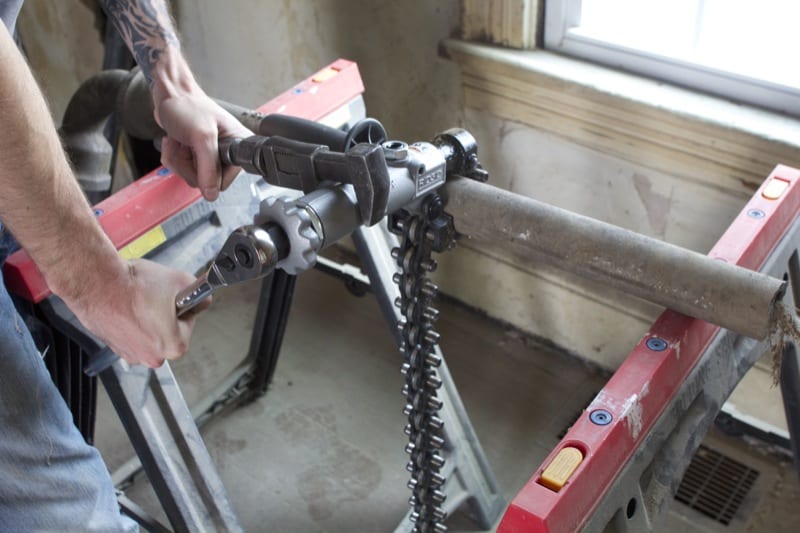
Occasionally, you’ll cause a lengthwise crack in the pipe while using snap cutters. This typically indicates you either tightened the tool too quickly or you simply need to replace the pipe due to degredation.
When using a snap cutter, keep the cutting wheels spinning and the chain rust-free to guarantee good cuts. Manual snap cutters’ long handles may not fit in tight spaces, but there are some smaller versions available. You can even find powered models like the Ridgid 238-P soil pipe cutter.
Cutting Soil Pipe with a Reciprocating Saw
A reciprocating saw with a diamond blade can get the job done with a clean cut, but don’t schedule an early tee time. Reciprocating saws cut slowly, and these blades are expensive.
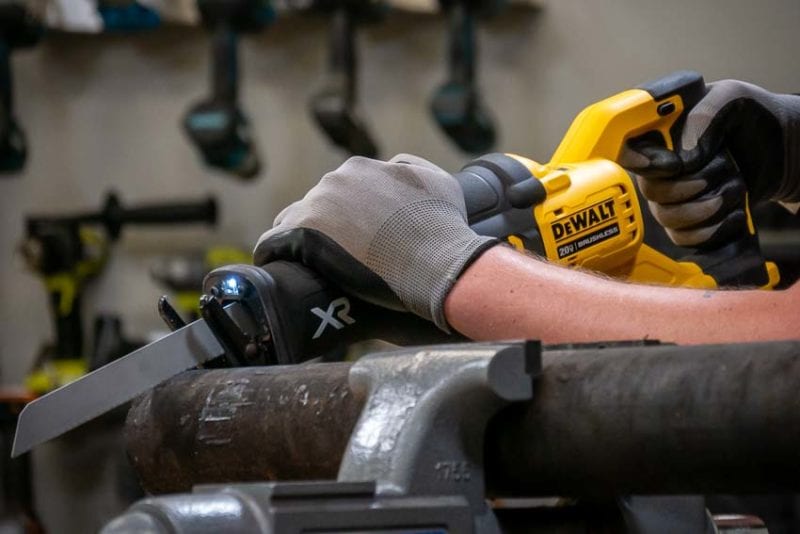
More recently, advances in carbide tooth manufacturing methods have yielded some excellent products. They typically don’t do more than a couple of pipes before failing, but they do the job much more quickly than diamond blades. We’ve found that the following blades do very well on cast iron and soil pipe:
- Diablo Steel Demon Amped thick metal carbide recip saw blade
- Milwaukee Torch Nitrus carbide reciprocating saw blade
- Lenox LAZER CT carbide thick metal blade
To see how some of these carbide blades performed when cutting cast iron, check out this video.
Using a Grinder with Cutting Wheel
Pros often cut soil pipe with grinders using abrasive discs. We actually prefer either a cutting wheel—or better yet—a diamond wheel. It’s hard to go wrong with a grinder for a clean, speedy cut. Although the cut will be clean with a grinder, it’s likely that the surrounding area won’t be. Dust and spray can quickly make a mess of the area. Just be sure to use the guard on this tool and angle it properly.
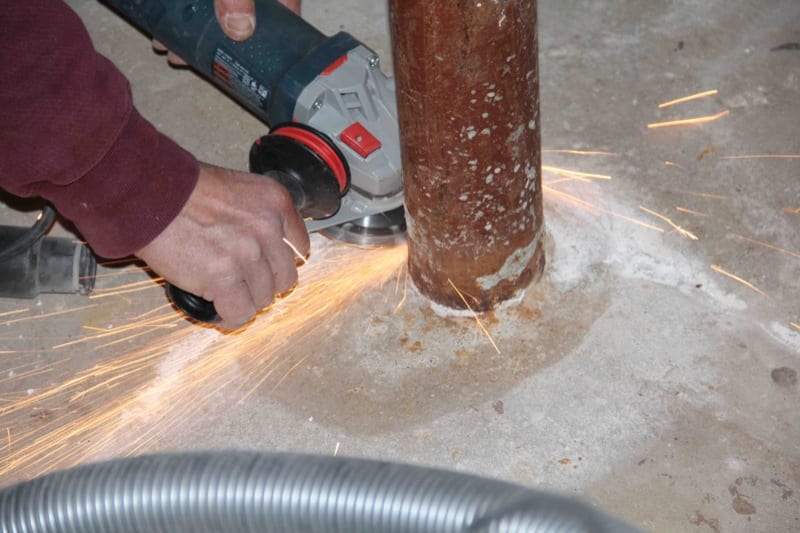
Since a grinder is a handy tool for many other applications, it’s likely that you’ll have one available. If the idea of getting messy doesn’t cause you to panic, the angle grinder might be the best option.
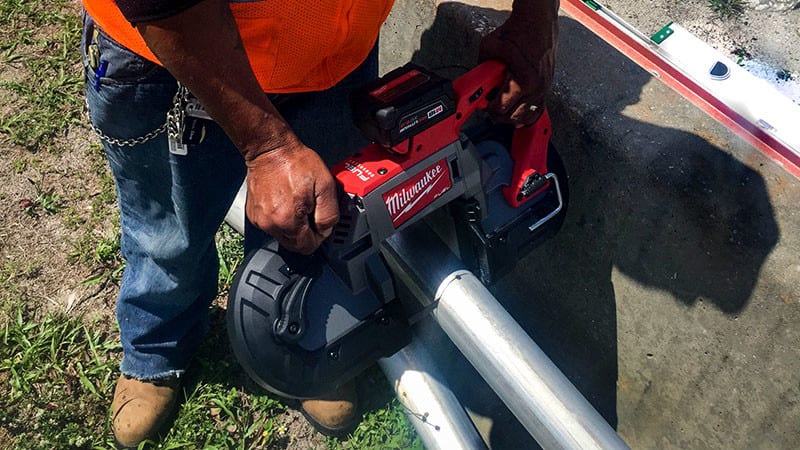
Grab a Portable Band Saw
Pros use the portable band saw less frequently. However, it certainly can fit the bill as the blade moves slowly and steadily through tough metal. It also generates zero kickback and makes nice straight cuts if you line it up properly.
Final Thoughts
The snap cutter and the grinder seem to be the most preferred tools for cutting soil pipe. Newer carbide reciprocating blades make quick work of pipe—even in cramped spaces. Those blades don’t come cheap, however, and you only typically get 2-3 cuts in cast iron before you have to replace them.
When there’s not a lot of room to work or there’s very little margin for error on the pipe, many pros opt for the grinder—even if it does get messy. We hope you’ve gained something from this article on how to cut soil pipe. If you’re a Pro and you have soil pipe cutting tips, add them in the comments below. You can also reach out to us on Facebook, Instagram, or Twitter.