
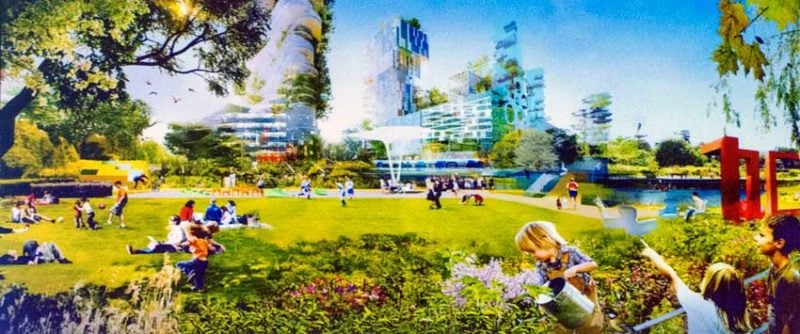
Husqvarna’s annual Silent City 2 meeting began with an expanded vision for the future of urban parks. This vision will no doubt grow, and could include rooftops, automated maintenance, and a greater community adoption and shared “ownership”. One thing is for certain: the look of circa 2030 urban parks could be a lot different from what we imagine today’s parks to be.
Pavel Hajman, president of Husqvarna Division, opened up their annual meeting at the Technical Museum in Stockholm, Sweden. This year, the United Nations adopted new sustainability goals, and Husqvarna is committed to helping these become a reality. Husqvarna has been supplying forestry and or landscaping tools for the last 98 years.
While Husqvarna aims to leverage customer-centric innovation to integrate sustainability with efficiency, our interest lies in its impact on outdoor power equipment. Ergonomics and safety will be key, along with tool intelligence. This extends to smart tools as well as user information to better understand how Pros use these tools. We covered a lot of this in our article on the Husqvarna Fleet Services system.
Drone, Robots, and Green Cities—Oh My!
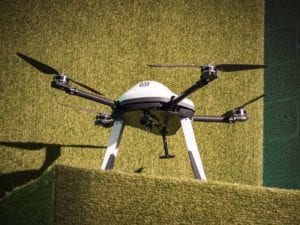
As more and more parks follow the urbanization of cities, drones, robotics, and greener solutions will become more and more important. Battery-powered products will be a key part of this future city and park infrastructure. They almost have to be, as some of the green areas are likely to be in places difficult to reach.
New software and connectivity solutions are also on the horizon to enhance the maintenance and productivity of workers associated with these expanding modern parks.
Could a Husqvarna drone be on the horizon? Unlikely, but it represents the idea of how materials and accessories might be delivered to remote locations in the future. As a fun aside, Husqvarna did a Top Gear-style race between a car and a drone to deliver trimmer line to a remotely located Pro who ran out while trimming in a field. The drone got the line there in 1/5th the time. Realistic? Perhaps. Certainly food for thought.
Green Spaces as a Solution for Societal Health

Thomas Elmqvist, professor in Natural Resource Management at Stockholm Resilience Centre, Stockholm University, spoke next. Sedentary lifestyles are driving various populations to be overweight (the USA is one of the worst “offenders”). Society seems to spend a lot of investment on smoking, drug abuse, armed violence, and other areas, but obesity, which consumes as much or more public resources, gets a disproportionate amount of funds.
The addition of a greater number of green spaces, be they parks or public garden areas, might be one solution.
With greater green spaces comes a greater need for equally “green” tools. That, of course, is our focus. These green tools bring with them advances in battery technology. They need more power, greater run-time, and better features. All of these advances are going to be mandatory if any of these ideas are going to become a reality for the municipalities that want them implemented or even mandated.
Green Tool Trends
Continuing this thought, Husqvarna next looked at some trends, including battery technology, the data revolution, consumer groups, and changing customer values & resources. All of these seem to be coming together to shape the industry as well as what products will aid in moving towards greater sustainability.
Husqvarna aims to reduce the carbon footprint of its tools through a couple of key methods. First, they are reducing emissions in their gas products. Second, the use of fleet services and their extensive line of battery products is also a large part of their efforts.
Robotic Mowers for Roundabouts?
Husqvarna did a case study where they evaluated how difficult it typically is to mow large roundabouts where you might have as much as two lanes of traffic to cross with a mower. It eliminates grass clippings, eliminates mow lines, and simplifies maintenance. Husqvarna currently has nearly 1 million robotic auto mowers on the market. As this is a proven concept for consumers, they’re now looking towards the Pro commercial market. They think this makes sense in terms of cost, time savings, environmental concerns and better results.
A robotic mower costs less than $0.25 per square yard per year to run. There are no emissions. There’s almost no noise, and it even removes risks. There’s no operator on-site. Cut quality also improves because the lawn always looks mowed, and you get fairway cut quality. Our experience with the Husqvarna Automower 315 has proven most of these claims to be perfectly accurate.
The new Husqvarna automowers can be observed and monitored via software, allowing for effective fleet management. You can see the model, location, and status of each mower so that you know exactly what each is doing. Status can include errors, and you can observe battery levels and call up the mower on a Google map. You can call up specific mowers and park them, or even instruct them to resume mowing.
Husqvarna wants to begin testing these commercial mowers in several cities next year. It should prove to be an interesting change to how commercial landscaping professionals handle remote mowing locations.
Testing New Outdoor Power Tools
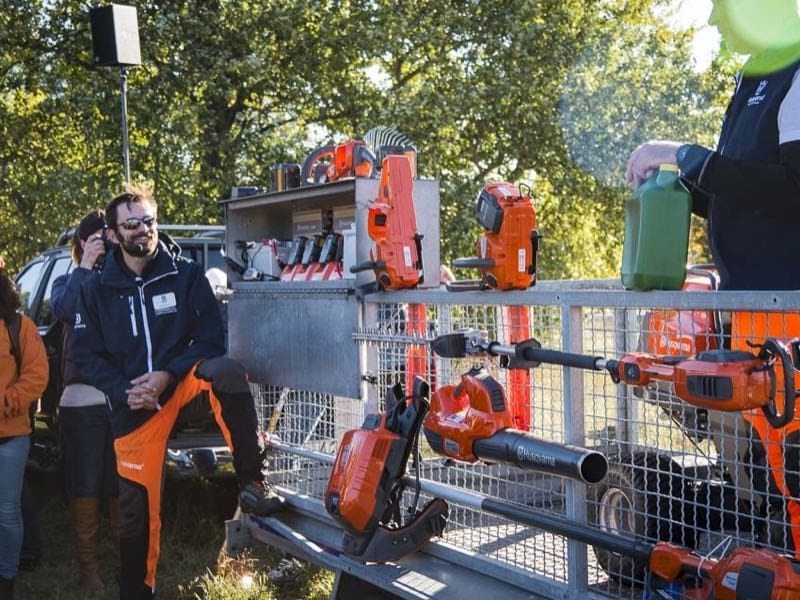
Finally, we got to go outside and test some pretty cool new outdoor power tools. Aside from the Husqvarna 436LiB 36V blower, Husqvarna 536LiL string trimmer, and Husqvarna 36V hedge trimmer we already reviewed, we also saw some new tools. We’ll cover these new tools in more detail in a subsequent article.