
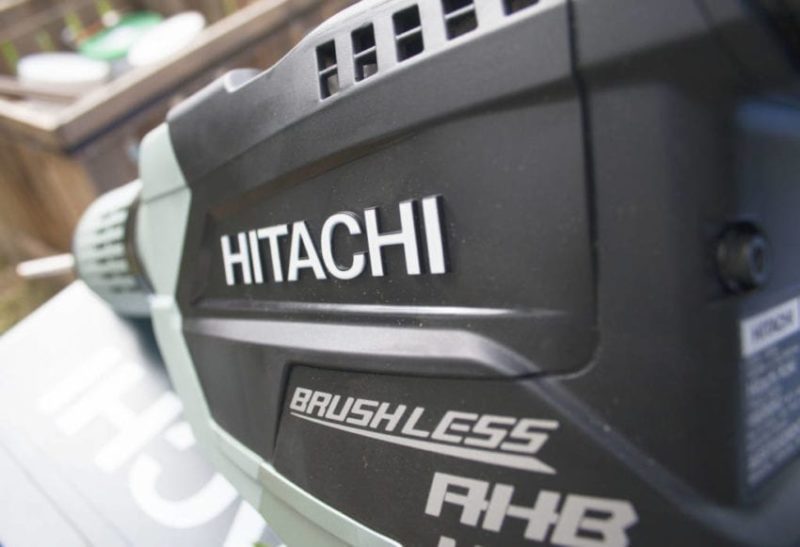
We’ve been impressed with the quality and performance that Hitachi Power Tools has brought to the market recently, and apparently, we’re not the only ones who’ve taken notice. That quality and performance translated into a robust business, which was acquired by private equity firm KKR (Kohlberg Kravis Roberts) in a deal for a majority stake in Hitachi Koki, including the power tools division.
Hitachi sold KKR all of the common stock holdings, which comprise 40.25% of the business, as well as a 10.9% stake previously held by Hitachi Urban Investment, Ltd (HUI).
Hitachi Power Tools Sold
KKR is renowned for leveraged buyouts (LBOs), where a combination of cash and a substantial amount of debt, collateralized by the company’s cash flow, is used to acquire the company. It’s not immediately clear how the Hitachi-KKR deal was structured, but the price per share KKR paid values its stake at $1.3 billion. KKR plans to utilize its extensive resources and network to expand Hitachi’s business. At the same time, Hitachi is freed up to focus more on its core operations, such as infrastructure.
In the investment world, a purchase like this doesn’t come without extensive research on the front end. Hitachi bought out Metabo back in 2015, which gave them access to Metabo’s impressive industrial-level tools and LiHD battery platform. While there has been no direct claim by Hitachi that their cordless tools are benefiting from the relationship with Metabo, their most recent tools certainly indicate they’ve been improving the line drastically.
All of this culminates in the fact that KKR must see significant potential. After all, this isn’t a power tool company buying out another brand to bring its success in-house – this is an investment firm, and they expect to make money.
Changes in Hitachi Power Tools’ Direction?
Networking and expanding Hitachi Power Tools’ business is a strong indication that the Japanese brand will have more resources for development and potentially marketing. The Japanese don’t always see things culturally the way we do in America, though, so the biggest benefit may come in the way of improved products and expanded product lines. On the other hand, KKR is an American-born equity firm that should have a better pulse of the American market.
What About the Hitachi Brand Name for Power Tools?
According to several sources, including the official January 13th announcement, some folks at Metabo and hnn.biz, KKR has an agreement to continue using the Hitachi brand name for power tools for a given amount of time. From the announcement:
…upon completion of the Tender Offer, the Company will cease to be a subsidiary of Hitachi and any capital relations between the Company and Hitachi will cease. However, in order to continue the smooth operation Company’s business, a transition services agreement has been reached between Hitachi and the Company regarding the provision of IT and systems services and use of the Hitachi brand.
The real question is what will become of the Hitachi brand name on their power tools? Will it roll into the existing (but not very well-known) Metabo brand? Will they use that time to co-brand a transitional brand name? We’re not sure, but we’re anxious to find out. Reaching out to KKR Asia Limited, we were told that “Given where KKR and Hitachi Koki are in the early partnership days, [they] aren’t commenting on the brand name.” Fair enough. The truth may be that those decisions have simply not been made yet.
What’s Next?
Certainly, expect Hitachi’s pneumatic lineup to remain solid from top to bottom and the cordless line to continue its improvement. There’s no indication that KKR intends to materially change what Hitachi is doing. For now, it appears that Hitachi Power Tools’ sale to KKR is a strong vote of confidence in the enormous potential it holds for the coming years. How much confidence? This excerpt from their January 13th announcement says it all:
In the electric power tool industry to which the Company belongs, cordless tools are becoming increasingly prevalent, and this trend is expected to continue in the future. Further, due to the influence of the so-called IoT (Internet of Things), electric power tool products which can connect to the Internet are becoming popular, and efforts are being directed toward increasing customer satisfaction by enhancing various features to enable management of these products using the Internet. This situation has resulted in intensifying market conditions, inside and outside Japan, with increasing competition being seen in the development/introduction of new products and in expansion of sales and marketing as well as pricing competition among competitors.
In response to the above situation faced by the Company with the trend toward cordless products, KKR believes that faster growth is possible through reform of the Company’s manufacturing/development, sales and service systems, such as the development and introduction of new products with a focus on cordless products utilizing batteries and circuitry technologies developed in-house, reinforcement of a sales/marketing strategy aimed at having the Company’s high technological superiority recognized by customers, improvement of efficiency by integrating overseas manufacturing and sales operation bases as part of the structural reform which is in progress, and additional non-linear growth opportunities centered on M&A.