
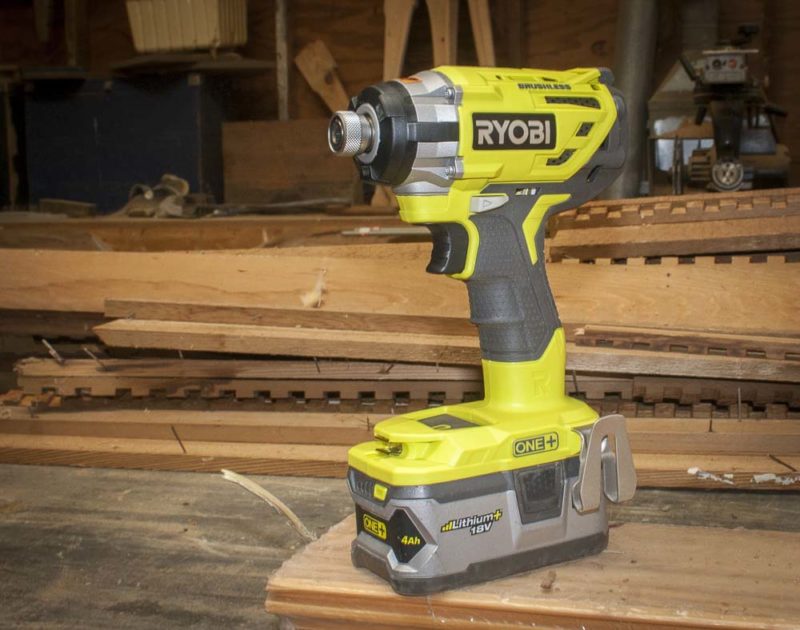
If you caught our guide on choosing the best impact driver, then you’ll know what distinguishes a great impact from a so-so one. No doubt that the Ryobi P238 18V Brushless Impact Driver would like to be in the running for a great tool. We’re going to find out today if it deserves to be there.
Check out our review of the upgraded Ryobi HP Brushless and Ryobi HP Compact impact drivers!
Key Features
For years, Ryobi’s tools flirted with the line between DIY and Pro tools, with most of its offering falling in the DIY category. More recently, however, Ryobi tools have stepped up the game a bit, and some can certainly be considered for professional use. In fact, we use them quite often on our jobs—we regard them as having a lot of bang for the buck. We’ve used the older Ryobi P1870 impact driver for a while now. This new version packs a bigger punch.
Brushless Motor
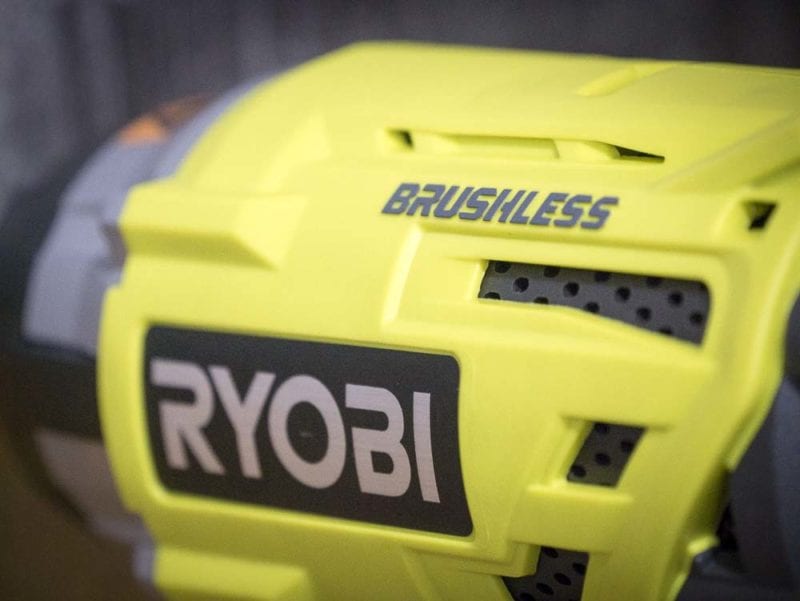
Right out of the gate, the Ryobi P238 18V brushless impact driver has a leg up on its older brother. The brushless motor is evidence of either technology that trickles down, Ryobi’s readiness for the big leagues, or maybe some of both. If you’re a regular reader, you know that brushless motors are electronically commutated; that is, there is no physical contact between brushes and the commutator. Brushless motors are more efficient, longer-lived, and lighter than their brushed counterparts. They are also the foundation of smart tools, that is, tools whose motors and batteries communicate to optimize performance and prevent thermal overload.
RPM Ranges and Variable Speed Trigger
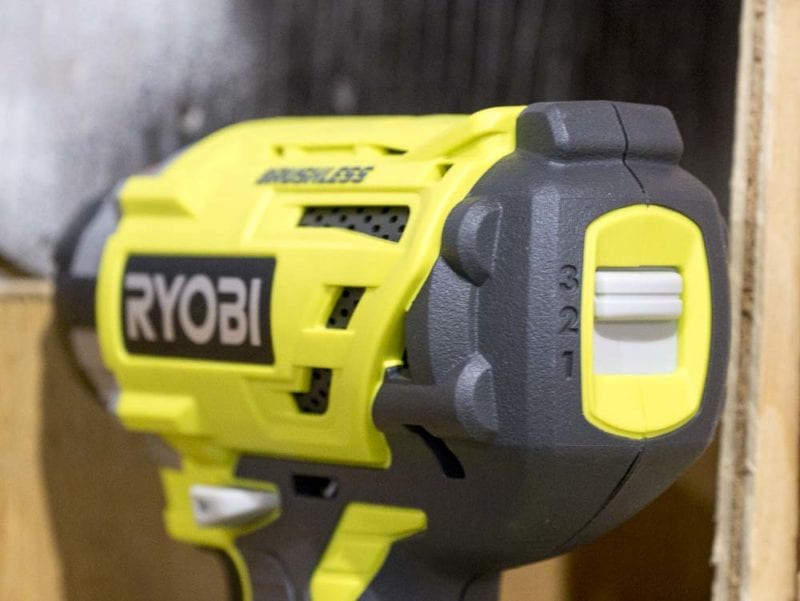
In the introduction, I mentioned that an impact drivers gives you a lot of control over the work by virtue of mechanical function. The Ryobi, like other impacts, further increases that control with the use of three RPM ranges: up to 1,050, then 2,200, and then up to 3,200 max. The switch to toggle between these speeds is on the back of the motor housing.
But those three speeds aren’t static; they are aided by a variable speed trigger for more nuanced control. Like just about every other tool on Earth, there are times when you need to run it wide open and other times you need to modulate the speed. These two functions accomplish that.
Impacts Per Minute and Torque
Impact drivers work by using a hammer and anvil system to generate pulsing rotational torque (in contrast to static torque like a drill). The measure of hammer-anvil strikes is unsurprisingly called impacts per minute (IPM). This is a measure not used for drills.
The Ryobi P238 18V brushless impact driver offers up to 4,000 IPM, which is actually on the high end. By way of comparison, the older version of this tool was at 3,400 IPM. The Hitachi Triple Hammer—one of the finest impacts available—is the same at 4,000 IPM. Impacts per minute aren’t the be-all and end-all metric but a higher number can certainly help.
Likewise, this new model delivers more torque than the older model: 2,200 inch-pounds compared to 1,500 inch-pounds. It’s important to note that that is in line or higher than just about every other cordless impact driver you can find at the Pro level. Ryobi might be punching above its weight, but you have to admit, on paper, it’s doing a fine job.
Auto-Load Chuck and Other Notable Features
Most impact driver chucks need both hands for bit changes, but the Ryobi 18V Brushless Impact Driver’s auto-load chuck is designed for one-handed changes. Once you eject one bit from the spring-loaded chuck, you push the next one in without having to pull out on the collet.
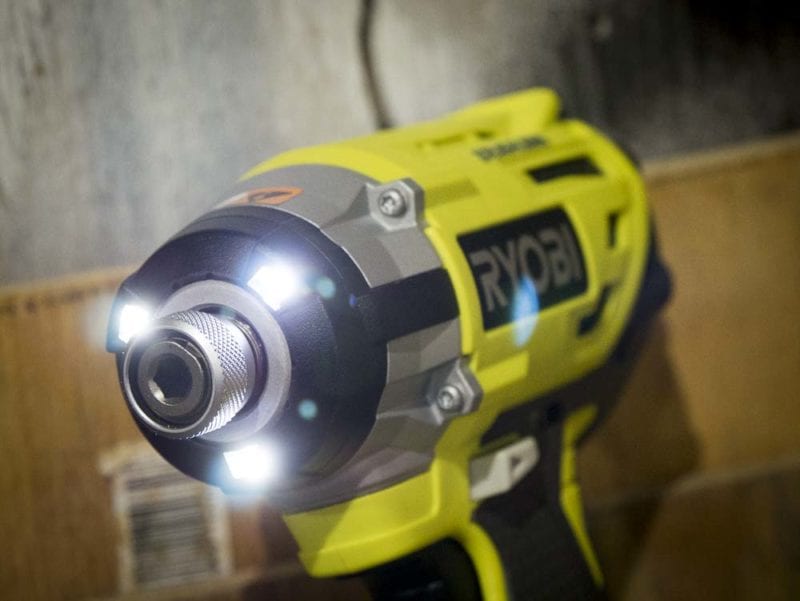
Nearly every power tool has an effective LED worklight these days, so we don’t spend much time talking about them. But that doesn’t mean manufacturers can’t take a crack at improvements. The 3-LED design around the front of the motor housing isn’t unique to Ryobi—I’ve seen them on some Hilti and Ridgid tools—but I’m surprised it doesn’t show up more often.
A magnet for holding bits and screws is another handy feature. If you’re lucky – or just good – you can sometimes catch falling fasteners with it! An ambidextrous belt clip and redesigned overmold grip round out the features I’ll have an eye on. Time to do some work!
Performance
Making An Impact
We’ve used the older version of this Ryobi impact driver for about three years now. We use it all the time – and we have beaten it up! But it’s never let us down. It just works. Time will tell if the new version is as durable, but I have hopes with its tough pedigree and bigger muscles.
So let’s review what’s new and improved in this model. The 3 speeds are new as are the auto-load chuck and belt clip, the torque is bumped up, the IPM is higher, the LED lights are a lot brighter, the belt clip is new.
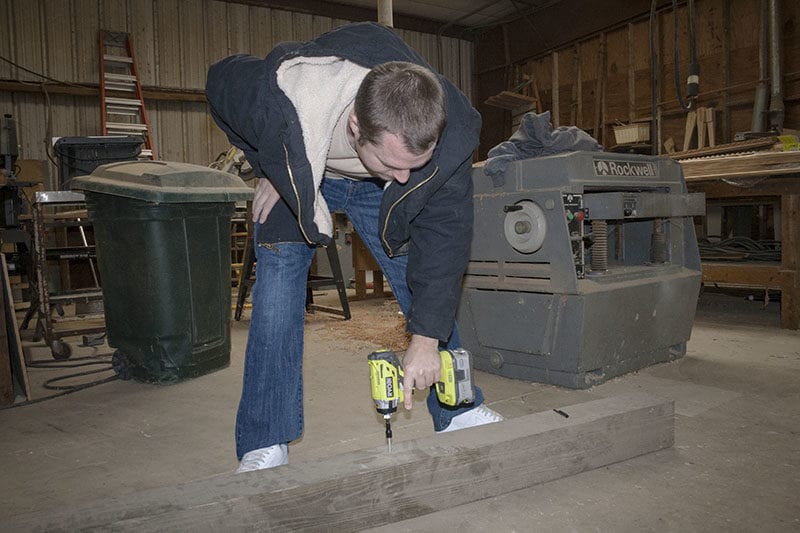
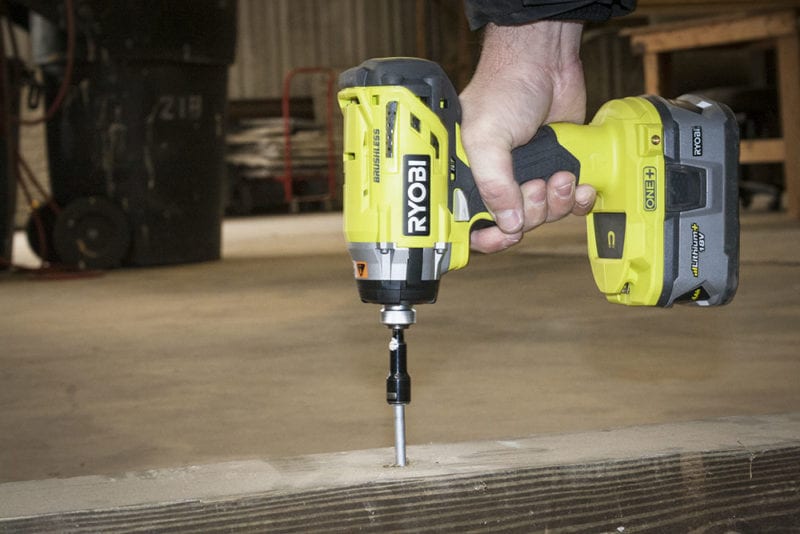
These are big improvements over the older model. Since an impact driver is a tradesman’s everyday tool, there was no shortage of test material during this review. I drove all sorts of fasteners, even large 3/8-inch lag bolts, and the Ryobi 18V Brushless Impact Driver didn’t break a sweat! I almost felt proud of Ryobi for making such a sweet tool for—wait for it—$99 (bare).
Fasten-ating
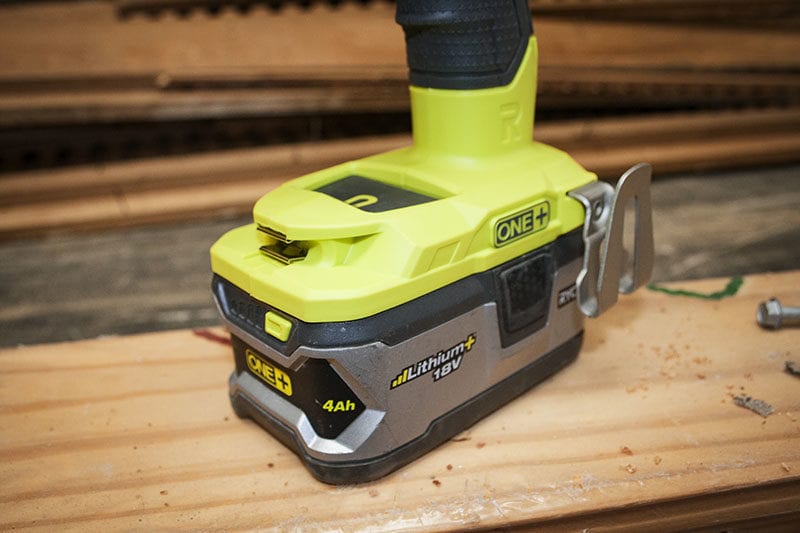
It weighs 2.7 pounds bare but, of course, the battery you choose will add some weight. Ryobi offers a compact 18V battery, but you’ll see I used the larger 4.0 Ah pack. All the controls are easy to reach and operate with one hand. That’s important—we’ve all been in tight spaces where getting your other hand/arm/shoulder is difficult or precarious.
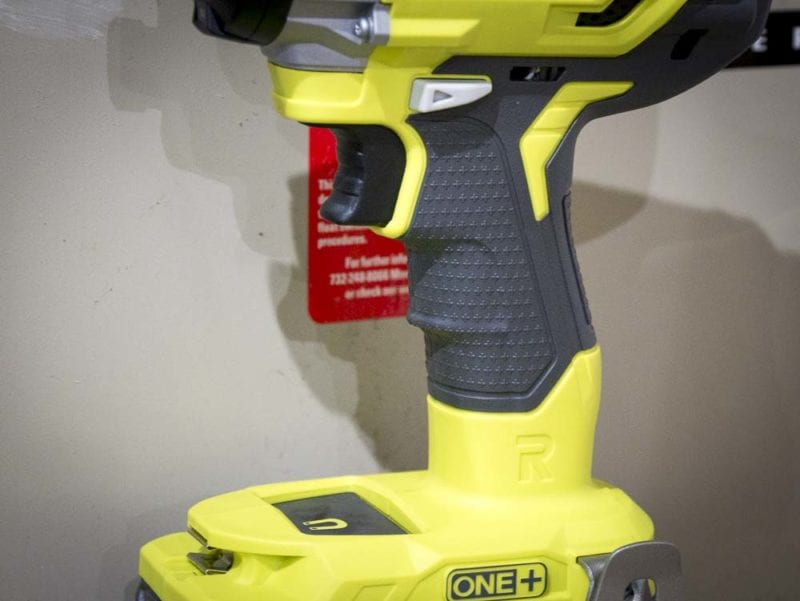
The redesigned grip zone overmold is comfortable and secure in the hand. Like Ryobi’s brushless circular saw and brushless reciprocating saw, the handle has a much better handle design. I like it a lot.
Impact drivers have a stubbier profile that’s well-suited to those tight spaces. At a bit over 6-1/4 inches long, it’s not the most compact impact in the world, but it’s certainly shorter than a drill. If you have a very small working area, you’ll probably have to opt for a 12V version from another manufacturer. Otherwise, this should do just fine.
The Bottom Line
These days, I generally refuse to drive fasteners with a drill. Compared to the impact driver, it’s just the wrong tool for the job, if that’s not too bold. You have to fight a drill’s rotational force, its weaker hand, and its larger profile.
The Ryobi 18V Brushless Impact Driver put on an impressive show during this review. It definitely swung for the fences and determined it wants to run with the Pro pack. I think it can – especially for that remarkable price I mentioned earlier—$99 for the bare tool. All told, it’s just a powerful, super-handy tool that’s now part of the 100+ Ryobi 18V family. Get yourself some impact-rated bits, and you’re ready for anything around the house or the job site.
Ryobi 18V Brushless Impact Driver Features
- Brushless motor provides more runtime, more power, and longer motor life
- 3-speed switch: 0-3,100 RPM, medium speed: 0-2,150 RPM, low speed: 0-1,100 RPM
- Variable speed trigger
- The powerful design produces up to 2,200 inch-pounds torque to easily drive or tighten large fasteners
- Up to 4,000 IPM (impacts per minute) for fast driving applications
- 3 LED lights minimize shadows
- Auto-load chuck for fast and easy 1-handed bit changes
- New gripzone with micro-texture for user comfort and control
- Belt clip mounts to either side of the tool for convenience
- Magtray magnetic holder for convenient placement of screws and bits
Ryobi 18V Brushless Impact Driver Specifications
- Model: Ryobi P238
- Drive Size: 1/4″ hex
- Depth: 6.31″
- Height: 7.75″
- Width: 3.25″
- Impacts Per Minute: 4,000
- Maximum Speed: 3,100 RPM
- Product Weight: 2.7 lbs
- Torque: 2,200 in-lbs
- Price: $99 (bare tool)
- Warranty: 3-year limited