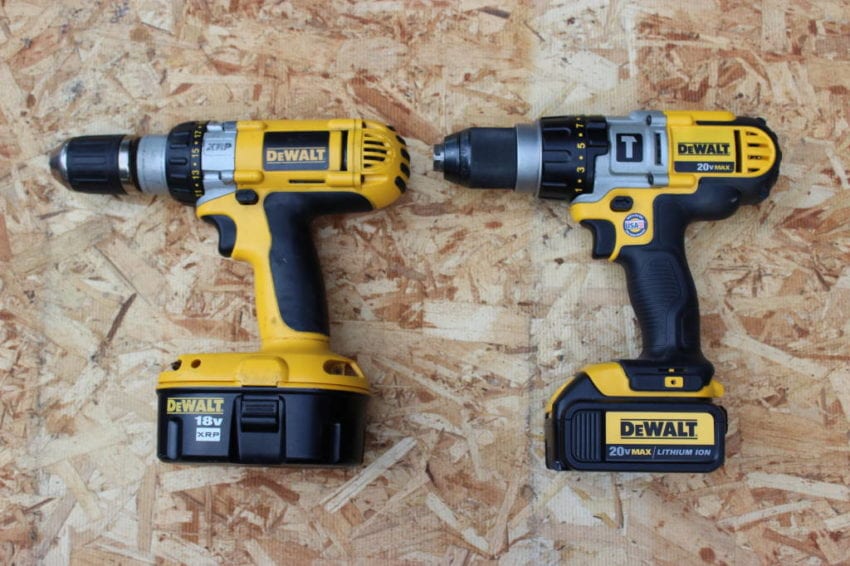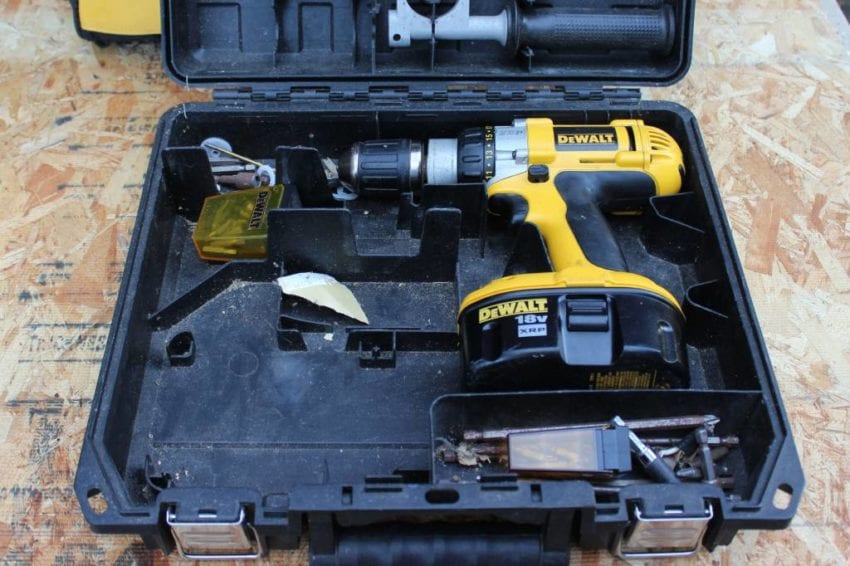
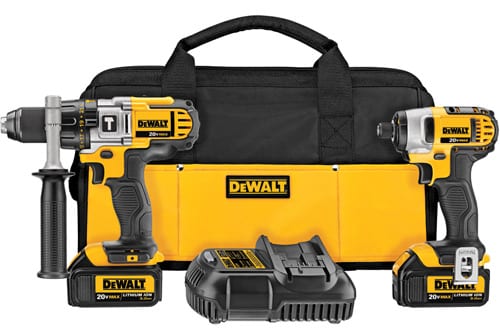
DeWALT may have the most loyal customer base of any other tool brand I can think of. Why is that exactly? I think I can answer that question with one picture:
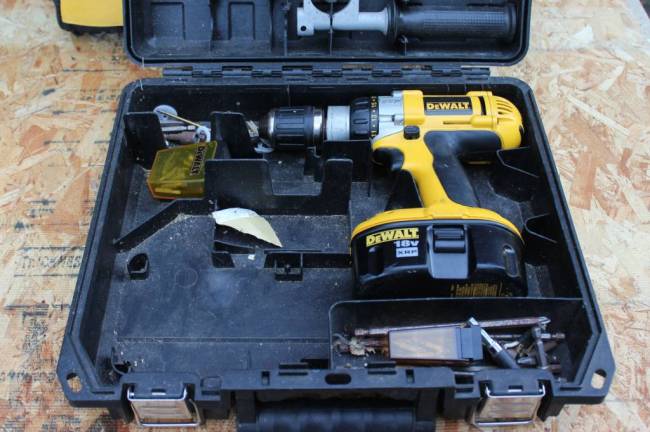
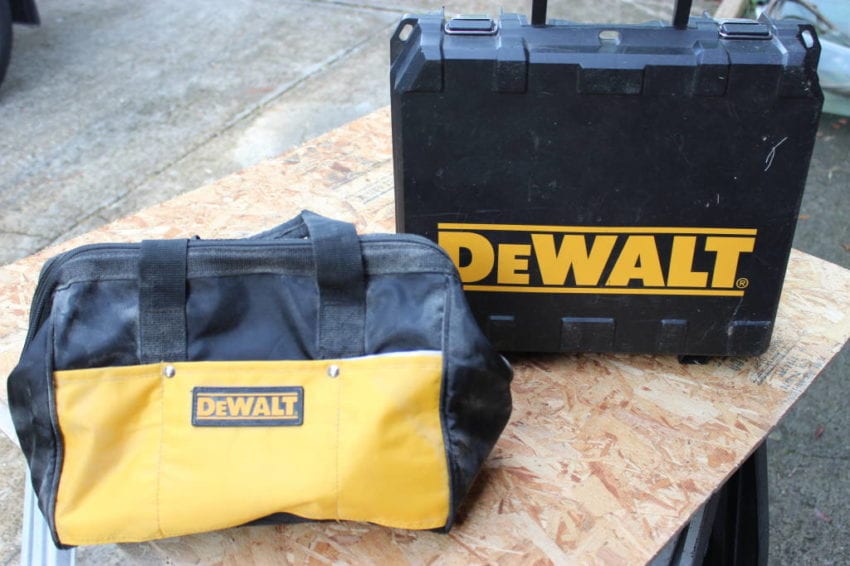
It’s the 12 year old Type 1 (!!!) 18v cordless drill. This thing is still drilling holes and sinking screws on a regular basis. I’ve gone through countless batteries over the years, but haven’t had any problems with the tool; it still lives in its hard case between workouts. I do have other drills, hammer drills, and impact drivers in-use now, so the Type 1 has definitely earned its status as a semi-retired “household” drill, but he never turns down a fight.
Choosing the DeWALT DCK290L2: To Go Brushless… or Not
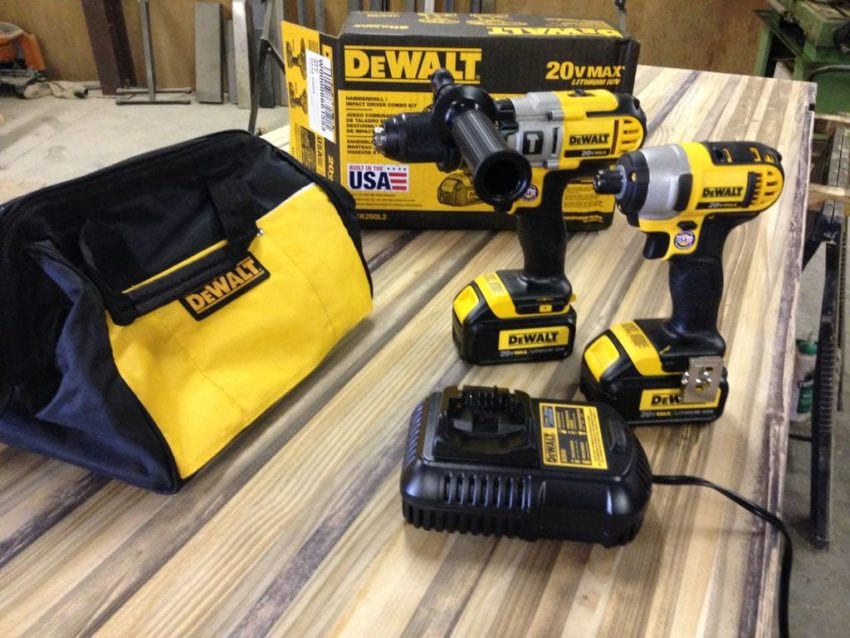
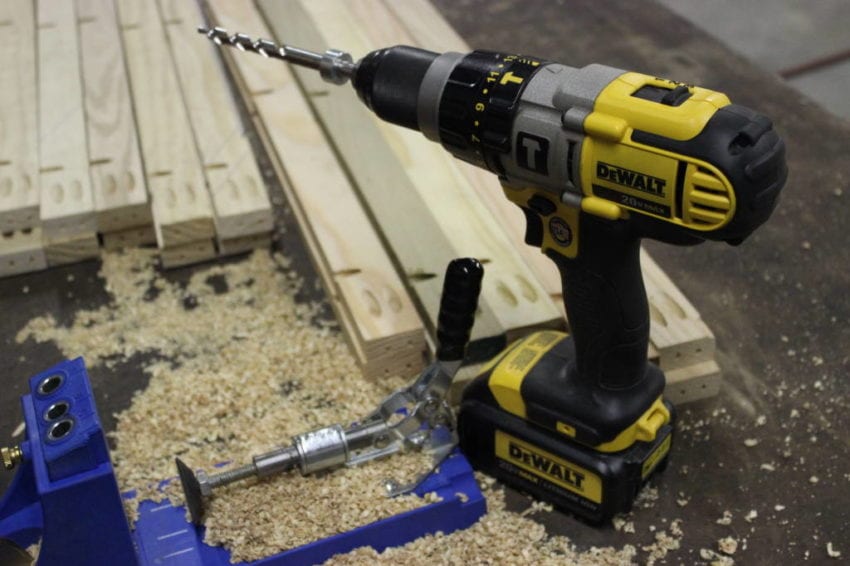
Have you seen the drill options on the market lately??? Not only do you have to narrow down the brands and voltage you prefer, but you also have to decide between brushed vs. brushless motors, driver drills vs. hammer drills, compact vs. standard size, etc. … For my needs, I’d definitely settled on another hammer drill kit. When considering which brand, I was torn between the lifetime warranty of RIDGID and a 10%+ boost in power from DeWALT’s new 20v MAX line. DeWALT was not intimidated by the competition, so they kindly let me try out one of their 20v combo kits.
Cruising DeWALT’s website for drill/impact driver combo kits, you’ll find almost 30 results. The following are the only combo kits that are both 20v and include a hammer drill, along with the average price I found online:
- DeWALT DCK285C2 $229
Compact Hammer Drill & Impact Driver
- DeWALT DCK286D2 $280
Brushless Compact Hammer Drill & Impact Driver
- DeWALT DCK290L2 $329
Hammer Drill & Impact Driver
- DeWALT DCK296M2 $369
Brushless Premium Hammer Drill & Impact Driver
Since I’m testing out the 20v for the power boost (over the 18v competition) I want the beefier drills for their torque and speed; so I’m ruling out the compacts. Brushless motors are definitely the trend when it comes to cordless power tools, but there’s always a trade off. Although the brushless kits have a slight edge in torque and a nice boost in battery life, they come at a 10-20% price increase over “old technology” brushed motors. I decided to go with the DeWALT DCK290L2, since I have such a solid track record with these drills and motors. I’ll take the savings and let the brushless options get a few more years under their belts to become more affordable and prove their long term durability. Ultimately your choice should depend on how you specifically use the tool and in what environment. The most expensive set might not always be the best choice for your application.
DeWALT DCK290L2 Out of the Box
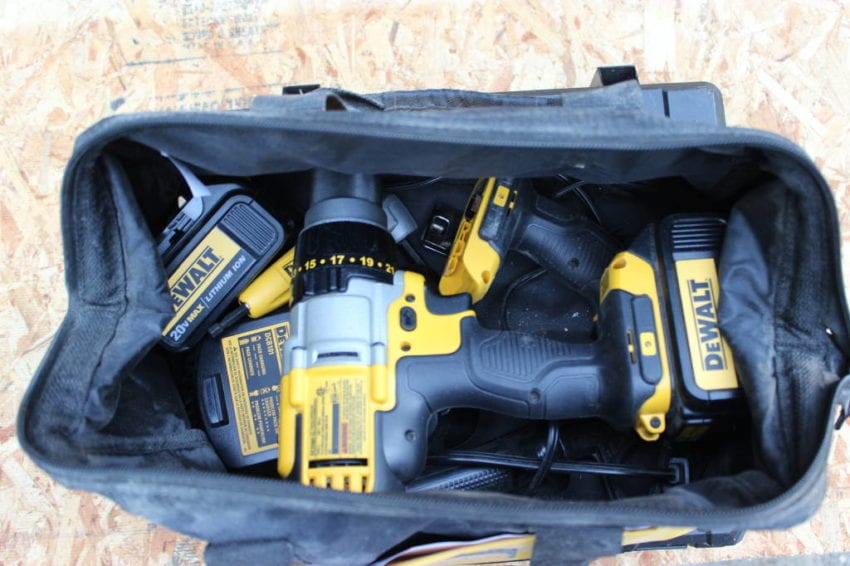
Bags, bags, and more bags – I need a bag to put all these bags in. I really loved all my black hard-shell cases with the big yellow “DeWALT” on them and there’s no doubt the hard case contributed to the long life of my Type 1. Come to think of it, I can’t remember the last tool I purchased that actually came in a hard case. I guess this is the way of the buffalo (unless you can find one of the elusive TOUGH SYSTEM boxes).
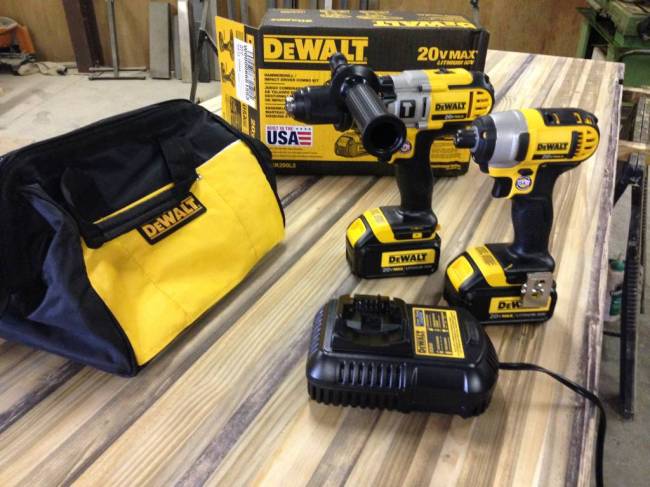
The tools feel great in your hand. The DCD985 hammer drill is definitely heavier than a compact, but that’s to be expected and both the DCD985 and the DCF885 (impact driver) feel very well-balanced. There are no storage clips for additional bits on either tool. I like to have a couple alternate bits on hand when I’m on a ladder or moving around the house with the drill, so this was a minor disappointment. I also wish they would include a second belt hook with the DeWALT DCK290L2 kit. Some of the other kits come with two, and I definitely like using it on either tool, so I find it inconvenient having to switch the hook back and forth between the drill and impact driver.
Moment of Truth for the DeWALT DCK290L2
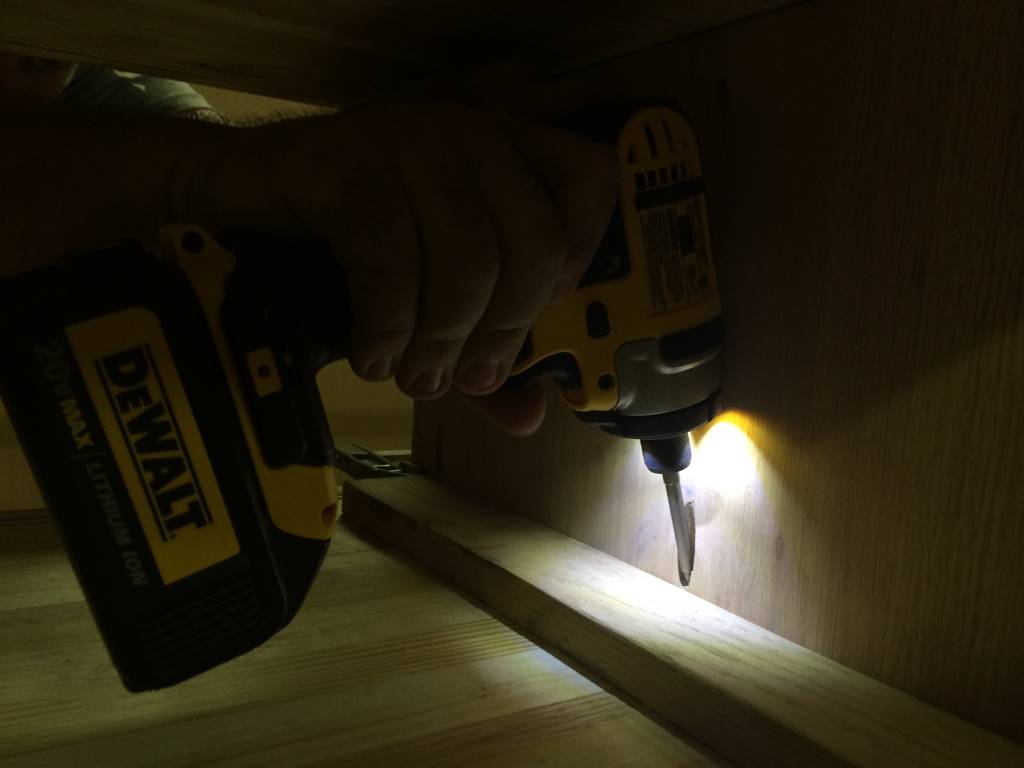
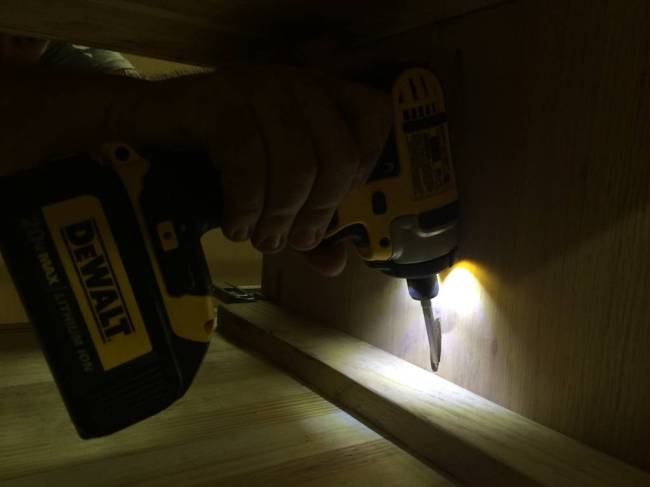
Here I am, about 5-6 weeks into steady use and my RIDGID 18v Li-Ion impact driver has started to collect some serious dust. The boost in power is substantial, enough that I debate waiting for the battery charge over grabbing the RIDGID. The DCF885 feels twice as powerful; it drives screws quite a bit faster and doesn’t get nearly as hot as my 18v. The three LED lights around the chuck are very bright—and for me, this is a pretty significant feature. While working inside a cabinet or with pocket hole screws, I found that the LEDs illuminated the screw head without any shadow whatsoever.
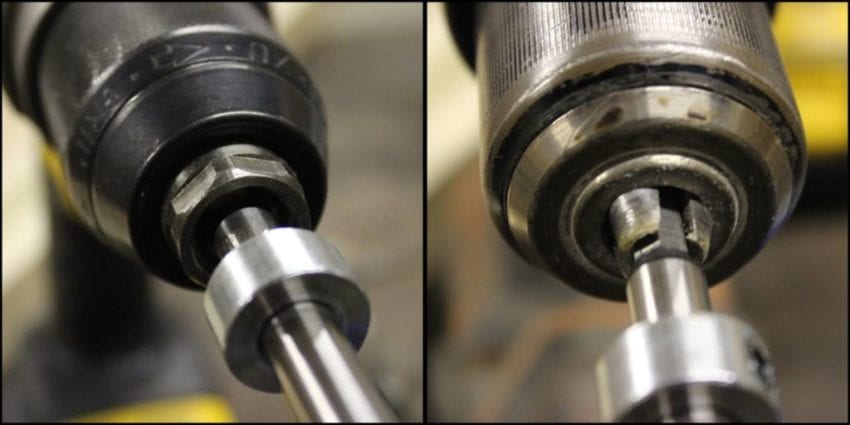
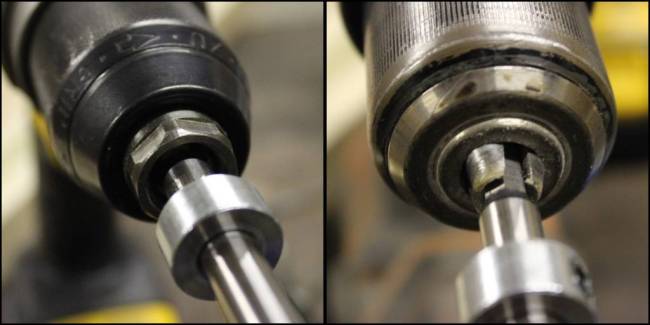
The DCD985‘s standout performance was in hammer-drilling large holes for concrete anchors and in sinking self-drilling screws. I just finished a job where I had to drive dozens of #12 self-drillers through 1.5” of wood into steel tubing, and the DCD985 put the RIDGID to shame. The 18v heated up after 10-12 screws and kept stopping mid-drive, battery still full, just too hot to keep going. The 20v easily powered straight through until I was done. The only drawback I noticed on the DCD985 was at the tip of the chuck: there’s a hex nut that protrudes out and covers the chuck claws enough to make it tricky to index larger bits. I’m sure I’m not the only one who watches the chuck claws to make sure they land on the flat spots of the bit. You can still index it by feel, but my habit is to watch it as I tighten the chuck.
The battery life is impressive on both the impact driver and the hammer drill. Even though my RIDGID batteries are a year old, I still feel like I’m changing them out 2:1 compared to the DeWALT 20v. I can easily get a solid day or even two days of intermittent use out of a full charge. That’s hard to beat. I certainly don’t recall the 18v batteries lasting this long, even when new.
Editor’s note: Jon is the owner of a furniture shop called Seveteen/20. As chief designer and fabricator, he produces some beautiful hand made pieces that are well worth a look. Check out his web page here!
Follow PTR on Twitter!
Like us on Facebook!
Follow us on Instagram!