
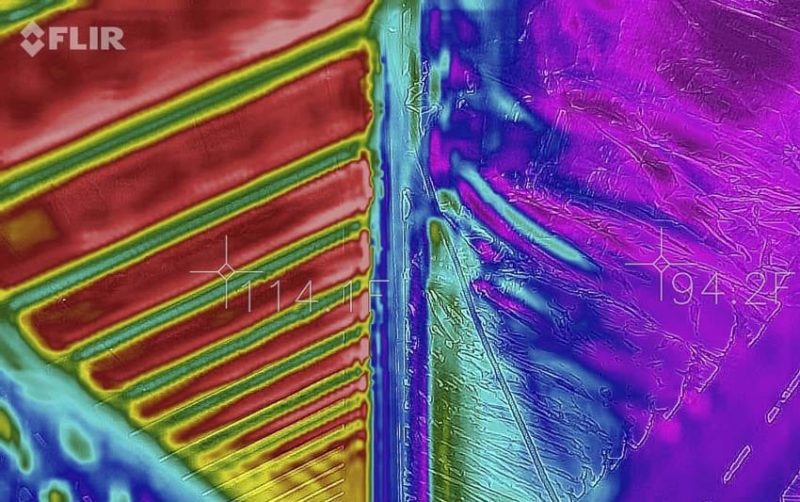
If you’ve looked into ways to gain energy efficiency in your attic, you may have come across radiant barrier technology. Understanding what a radiant barrier is and why it works can help you shave hundreds off your annual electricity costs.
What is Radiant Barrier?
A radiant barrier blocks “radiating” UV heat that would otherwise penetrate and heat objects and spaces like the inside of your attic. The word more or less gives it away—a radiant barrier is anything that reflects heat back to the source. It keeps an object from becoming energized by UV rays and radiating its own heat.
So, What is Radiant Heat?
Radiant heat is energy (from the sun or any other source) that is transferred without making actual contact. Something heated up by radiant energy will eventually begin to emit its own heat in all directions.
The Quick Explanation–Where Do You Park Your Car?
You can understand why radiant barriers work simply by considering the best place to park your car. What happens when you park it out in the open when the ambient temperature hits 100º?
The inside of your car feels like an oven—reaching temperatures much higher than the 100º outside. Why is that? It’s because the very items inside your car, and your car itself, will literally radiate heat. The sun hits your glass and heats it up. It then hits the dash, and that heats up as well. But it doesn’t just heat up to 100º. It keeps heating up because the heat energy is stored in the material, making it generate that heat back into the environment—in this case, the vehicle interior.

Now, imagine you parked your car under a nice, thick shade tree on that same 100º day. What is the temperature of your car’s interior then? Probably very close to 100º.
But why?
The tree isn’t doing anything to cool your car. It merely blocks all of the radiant heat that would otherwise cause every part of your vehicle to emit its own heat, causing the temperature to rise and rise.
In a nutshell, radiant barriers function much like a really good umbrella that puts you in the shade. Because the heat of the sun isn’t directly on you, it no longer feels hotter than the ambient temperature—the temperature of the actual air around you.
The Science and Charty Stuff
OK, if that doesn’t do it for you, then take a look at this graphic:
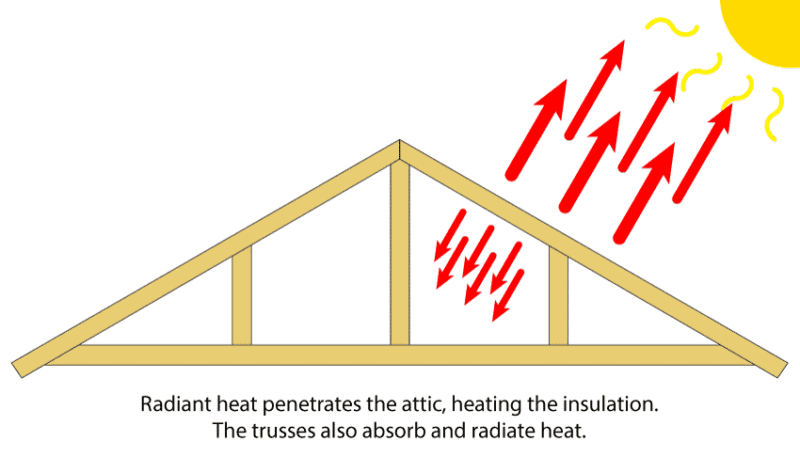
Here, radiant heat from the sun hits the attic roof, heating it up. It heats up the shingles, plywood decking, trusses, etc. Those items then continue to build up and radiate their own heat in all directions. While half of that heat may go back outside, the other half continues right on into the attic space. This heats up the insulation in the attic, the floor, the drywall that makes up your ceiling, and eventually, penetrates into the living space.
Remember how it heats up everything in the attic? That includes all of the AC ductwork that carries cool air throughout your home. Seems counterproductive, right?
That’s because it is.
What is Radiant Barrier Technology?
Now take a look at what happens when you add a radiant barrier with proper ventilation:
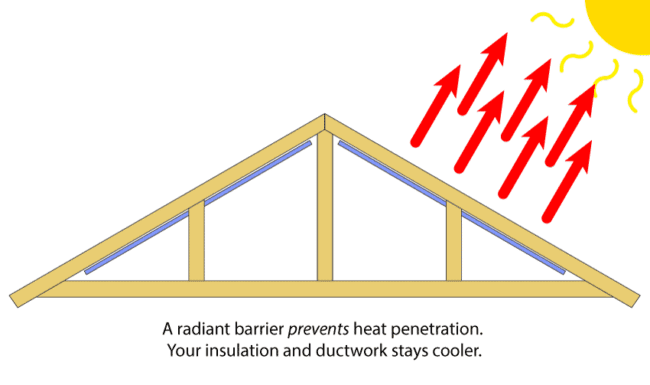
Now, we’ll be the first to tell you that not all of the heat bounces back. But a large portion of it does—up to 95% or more. That’s HUGE. Instead of your attic heating up to 160º F (no, we’re not joking, I’ve taken these measurements myself), your attic will stay at a toasty 100-110º F. That’s not cool by any means, but it’s a LOT cooler than what you get without the radiant barrier.
Radiant barrier is the first step to block radiant heat coming in from the sun. Your attic floor insulation is the second step, which blocks conductive heat flow to the rooms below. Radiant barrier products actually make your attic insulation work better. It even works in other applications as we recently installed radiant barrier in a shop.
Other technologies exist to help save energy as well. Bosch geothermal heating and cooling systems make a great example.
What About Insulation? Or More Insulation?
Insulation is great. In fact, we’d go so far as to say that if you don’t have at least R40 in your attic, you should do that first—or at least budget and plan for it. Here are some typical recommended home insulation R-values for wood-framed buildings per Energy Star:
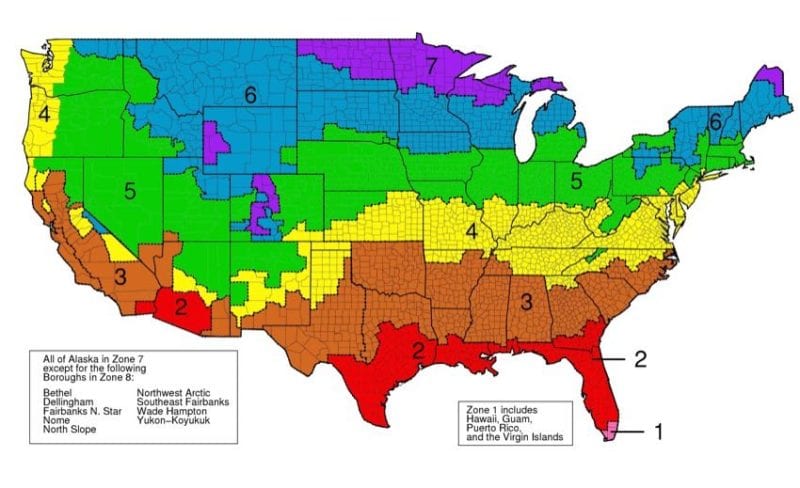
Zone 1
- Uninsulated attic: R30 to R49
- Existing 3–4 inches of insulation: R25 to R30
- Floor: R13
Zone 2
- Uninsulated attic: R30 to R60
- Existing 3–4 inches of insulation: R25 to R38
- Floor: R13 to R19
Zone 3
- Uninsulated attic: R30 to R60
- Existing 3–4 inches of insulation: R25 to R38
- Floor: R19 to R25
Zone 4
- Uninsulated attic: R38 to R60
- Existing 3–4 inches of insulation: R38
- Floor: R25 to R30
Zone 5 to 8
- Uninsulated attic: R49 to R60
- Existing 3–4 inches of insulation: R38 to R49
- Floor: R25 to R30
Insulation Is Not Enough
Insulation, however, isn’t enough. First, insulation does nothing to defend against rising radiant heat levels in the attic. It will eventually heat up as nothing blocks that transfer of heat. Second, insulation is made better by a radiant barrier. If the insulation in your attic stays cooler, your living space stays cooler. Also, your AC unit won’t need to work nearly as hard to cool it down. That means lower energy bills and faster cooling.
Wrapping it Up
Hopefully, we’ve made the case for installing and using a radiant barrier. You can save money over the long haul, enjoy better cooling in warmer climates, and solve problems related to achieving cooler temperatures in your home.
Here are some great radiant barrier products you can purchase for use in your home:
- AtticFoil (available in 26″, 48″, and 60″ width rolls)
- REACHbarrier.com (includes specific products for attics, garage doors, water heaters, and more)